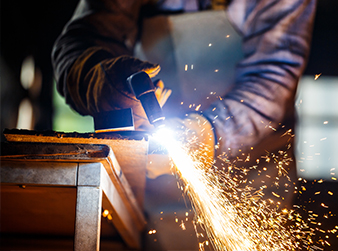

Industrial Automation Solutions for Modern Industries
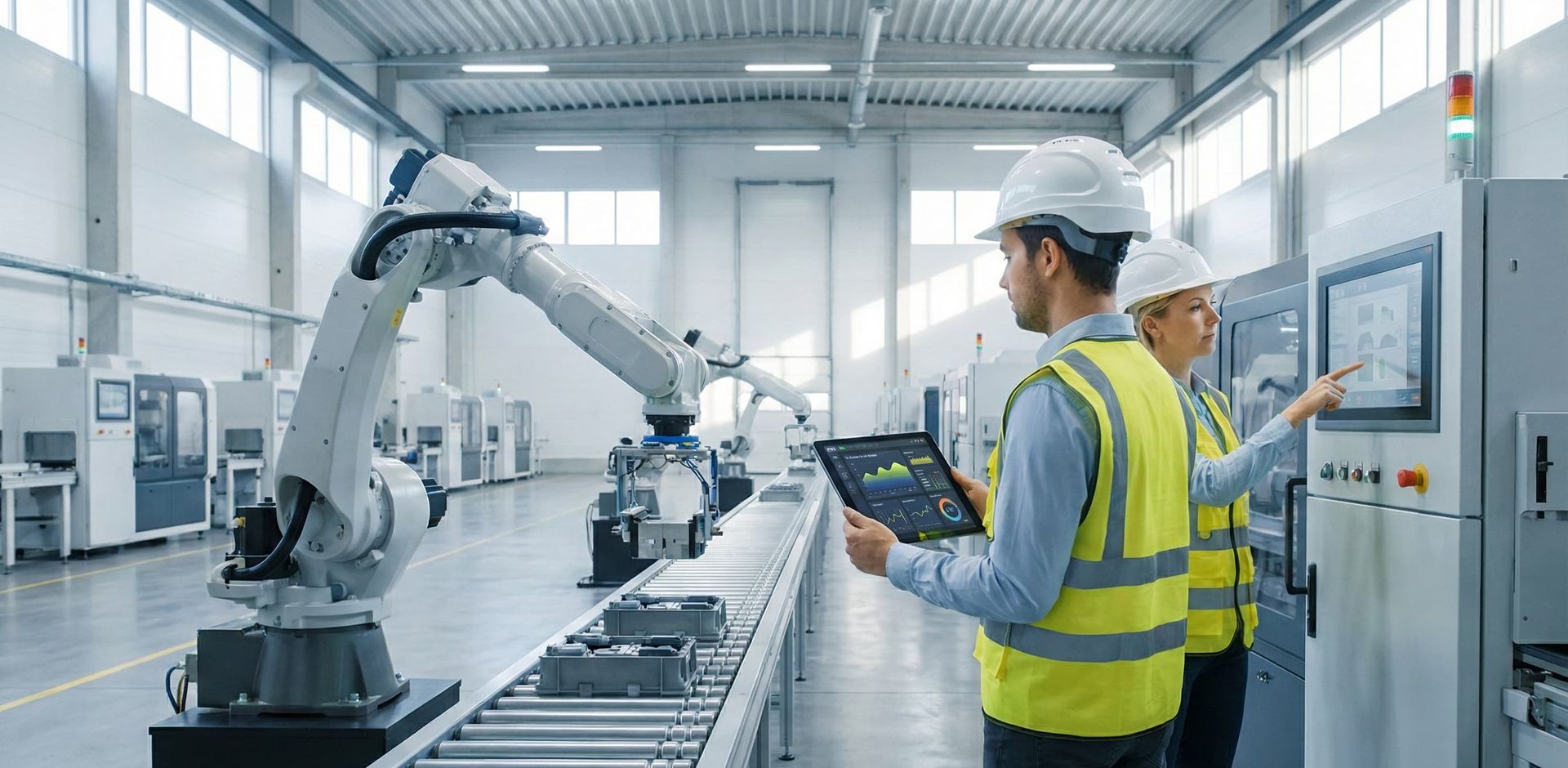
- Actuators
- Sep 26, 2026
- 14 Views
Industrial Automation Solutions for Modern Industries
Modern industries are under constant pressure to increase productivity, maintain consistent quality, reduce operating costs, and respond quickly to changing market requirements. Traditional manual processes can make these goals difficult to achieve because they often depend on human intervention, repetitive activities, and inconsistent operating conditions. Automation provides a practical way to improve these processes by combining advanced control systems, sensors, software, machinery, and communication technologies. Industrial Automation Solutions help manufacturers create connected production environments where machines and systems can perform tasks with greater speed, accuracy, and reliability. From material handling and assembly to process control and monitoring, automation can be applied across numerous industrial operations. As industries continue moving toward smart manufacturing, automation is becoming an important part of improving operational performance while creating safer and more flexible production environments.
What Are Industrial Automation Solutions?
Industrial automation refers to the use of control systems, computers, robots, sensors, software, and other technologies to operate industrial processes with limited manual intervention. These systems can control individual machines or coordinate complete production lines. Industrial Automation Solutions are designed according to the specific requirements of an industrial facility, including its production volume, machinery, processes, safety requirements, and future expansion plans.
A typical automation system may include programmable logic controllers, human-machine interfaces, variable frequency drives, sensors, actuators, industrial robots, supervisory control systems, and industrial communication networks. These components work together to collect information, process commands, control equipment, and provide operators with real-time visibility. Properly designed automation can reduce repetitive manual work while allowing employees to focus on supervision, maintenance, quality management, and other higher-value responsibilities.
Key Components of Industrial Automation
An industrial automation system is normally built from several interconnected components. Each component has a specific function, and their coordinated operation determines the overall performance of the system. Sensors collect information from machines and processes, while controllers analyze that information and send commands to field devices.
Programmable Logic Controllers, commonly known as PLCs, are widely used for controlling industrial machinery. Human-Machine Interfaces, or HMIs, allow operators to monitor equipment and interact with control systems. Variable Frequency Drives can regulate motor speed according to operational requirements, helping equipment operate more efficiently. Industrial communication networks connect machines, controllers, and monitoring systems so information can move throughout the facility.
Other important components include industrial robots, control valves, actuators, switches, transmitters, safety systems, and supervisory software. When these technologies are selected and integrated correctly, they can create a coordinated automation environment capable of handling complex industrial processes.
Automation Component | Primary Function | Common Application |
|---|---|---|
PLC | Machine and process control | Production lines |
HMI | Operator monitoring and control | Machine interfaces |
Sensors | Data and condition detection | Temperature, pressure, position |
VFD | Motor speed control | Pumps, fans, conveyors |
Industrial Robots | Automated movement and handling | Assembly and packaging |
SCADA | Centralized monitoring | Process industries |
Actuators | Mechanical movement | Valves and machinery |
Safety Systems | Risk and equipment protection | Industrial plants |
Benefits of Industrial Automation
One of the major advantages of automation is improved production efficiency. Automated machines can perform repetitive operations continuously according to predefined instructions, reducing interruptions caused by manual processes. This can help manufacturers achieve more predictable production cycles and improve overall equipment utilization.
Industrial Automation Solutions can also improve product consistency. Automated systems follow programmed parameters and operating sequences, which can reduce variations that may occur when repetitive tasks are performed manually. Consistent production is especially important in industries where precise measurements, controlled temperatures, pressure levels, or accurate assembly are required.
Automation can also support workplace safety by reducing the need for workers to perform hazardous tasks directly. Machines can handle operations involving extreme temperatures, heavy loads, chemicals, or high-speed equipment while operators supervise the process from safer locations. The exact safety benefits depend on proper system design, risk assessment, installation, and maintenance.
Improving Productivity Through Automation
Productivity is an important consideration for manufacturers operating in competitive markets. Automated systems can help improve productivity by reducing unnecessary downtime, optimizing machine cycles, and coordinating multiple production stages. Instead of relying entirely on manual decisions, control systems can automatically respond to predefined process conditions.
For example, an automated conveyor system can move materials between production stations according to programmed sequences. Sensors can detect the presence of products, while controllers determine when equipment should start, stop, or change operation. Similar principles can be applied to packaging, filling, sorting, assembly, and material-handling operations.
Real-time monitoring also gives production teams better visibility into machine performance. Operators can identify abnormal conditions, review production information, and respond to problems more quickly. When automation is combined with effective maintenance practices, organizations can work toward reducing unexpected equipment interruptions and improving production planning.
Automation and Process Control
Process control is particularly important in industries where operating conditions must remain within defined parameters. Manufacturing plants may need to control temperature, pressure, flow, level, speed, or other variables continuously. Automated control systems can monitor these variables and make adjustments according to programmed requirements.
For instance, sensors can measure process conditions and transmit information to a controller. The controller compares the actual condition with the desired setting and determines whether an adjustment is required. An actuator, valve, motor, or other device can then make the required change.
This approach allows industrial processes to operate more consistently while reducing the need for constant manual adjustments. Process control systems are widely relevant to industries such as chemicals, pharmaceuticals, food processing, water treatment, power generation, oil and gas, and other process-oriented manufacturing environments.
Role of PLC and HMI Systems
PLC and HMI systems form an important part of many automated industrial installations. A PLC receives signals from field devices, processes programmed logic, and sends commands to connected equipment. Because PLCs are designed for industrial environments, they can be used for controlling machinery and production sequences in demanding conditions.
An HMI provides a visual interface between operators and machines. Through an HMI screen, operators can view equipment status, monitor process values, identify alarms, and adjust permitted settings. A well-designed interface makes it easier for operators to understand what is happening within a production system.
Together, PLC and HMI technologies can provide effective machine control and operational visibility. Their functionality can also be expanded by integrating additional sensors, communication systems, drives, and supervisory platforms as production requirements develop.
Industrial Robotics and Automated Handling
Robotics has become increasingly important in modern manufacturing. Industrial robots can perform tasks such as picking, placing, welding, painting, assembly, palletizing, packaging, and material handling. Their ability to repeat programmed movements with consistent timing makes them useful for high-volume production environments.
Robots can also be integrated with conveyors, vision systems, sensors, and other automated equipment. This allows multiple machines to coordinate their activities within a production line. In applications where products vary in size or position, vision and sensing technologies can provide information that helps automated systems respond appropriately.
The successful use of robotics requires careful planning. Factors such as payload, reach, speed, workspace, safety requirements, product characteristics, and maintenance must be considered before implementation. Proper integration can help organizations build flexible production systems that support changing manufacturing requirements.
Energy Efficiency and Automation
Energy consumption is another important consideration for industrial organizations. Motors, pumps, compressors, fans, heating systems, and other equipment can consume significant amounts of energy. Automation can provide better control over when and how equipment operates.
Variable Frequency Drives, for example, can adjust motor speed according to process requirements instead of always operating at a fixed speed. Automated scheduling can also prevent equipment from running unnecessarily when production demand is low.
Monitoring systems can collect energy-related information and help identify unusual consumption patterns. This information can support maintenance and operational decisions. While automation alone does not guarantee energy savings, properly engineered control strategies can contribute to more efficient equipment operation.
Data Monitoring and Smart Manufacturing
Modern manufacturing is increasingly based on data. Automated equipment can generate information about machine status, production quantities, operating conditions, alarms, downtime, and other performance indicators. Collecting this information allows organizations to gain greater visibility into their production activities.
Industrial Automation Solutions can connect control systems with monitoring and data platforms to provide useful operational information. Supervisors may use dashboards to review production trends, while maintenance teams can analyze machine conditions and identify recurring issues.
When automation data is combined with industrial analytics and connected systems, manufacturers can move toward smart manufacturing practices. This can support better decision-making, process optimization, predictive maintenance strategies, and improved resource planning.
Applications Across Different Industries
Automation technology is not limited to a single type of manufacturing. It can be adapted to different industrial environments based on their processes and requirements. In automotive manufacturing, robots and automated assembly systems can support welding, painting, inspection, and material handling.
In food and beverage production, automation can control filling, mixing, packaging, temperature, and conveyor operations. Pharmaceutical facilities may use automation for precise process control, production monitoring, and batch management. Water and wastewater facilities can automate pumping, chemical dosing, filtration, and monitoring processes.
Other applications include power generation, oil and gas, chemicals, cement, textiles, plastics, logistics, and warehouse operations. The specific automation architecture depends on production requirements, environmental conditions, safety considerations, and the level of control required.
Important Considerations Before Automation
Implementing automation requires more than simply purchasing equipment. Organizations should first understand their existing processes and identify the areas where automation can provide practical value. A detailed assessment can help determine which machines, processes, or production stages should be automated.
Important considerations include:
Production volume and process requirements
Existing machinery and control systems
Required level of automation
Safety and regulatory requirements
Communication and networking needs
Maintenance capabilities
Operator training requirements
Future expansion plans
Budget and expected operational benefits
A phased implementation can sometimes be more practical than attempting to automate an entire facility at once. Starting with a clearly defined process can allow organizations to evaluate performance before expanding automation to additional areas.
Future of Industrial Automation
The future of manufacturing is expected to involve greater integration between automation, industrial software, data analytics, robotics, and connected equipment. Technologies associated with smart factories can provide manufacturers with more detailed information about production activities and machine performance.
Artificial intelligence and machine learning can also be used alongside automation systems for applications such as anomaly detection, quality inspection, demand analysis, and predictive maintenance. Industrial Internet of Things technologies can connect sensors and equipment to broader monitoring platforms, enabling organizations to collect and analyze information from multiple production areas.
Conclusion
Industrial automation has become an important technology for manufacturers seeking greater efficiency, consistency, safety, and process control. From PLC-based machine control and robotics to process monitoring, energy management, and industrial data analysis, automation can support many different areas of modern production. Industrial Automation Solutions can be designed around specific operational requirements rather than following a single standard approach. Successful implementation depends on appropriate technology selection, professional system integration, effective maintenance, operator training, and careful planning. As manufacturing continues to adopt connected technologies and smart production practices, automation will remain an important foundation for creating more efficient, flexible, and data-driven industrial environments.
Related Posts
- Sep 15, 2026
- SUDE
- 10
Industrial Valve Manufacturer: Engineering Reliable Flow Control Solutions
Explore More