

Flow Control Solutions for Efficient Industrial Fluid Management
- Actuators
- Sep 24, 2026
- 12 Views
Flow Control Solutions for Efficient Industrial Fluid Management
Efficient fluid management is essential for the safe and reliable operation of industrial systems. Water, steam, oil, chemicals, gases, and other process fluids must move through pipelines at controlled rates and pressures to maintain consistent production. Uncontrolled flow can lead to pressure fluctuations, equipment damage, energy losses, leakage, and inefficient processes. Modern Flow Control Solutions help industries regulate, isolate, divert, and manage fluids according to specific operational requirements. These solutions can include valves, actuators, control systems, instrumentation, pumps, and monitoring technologies. By selecting suitable components and integrating them correctly, industries can improve process stability while reducing maintenance requirements and operational risks. From manufacturing and water treatment to oil and gas, chemical processing, power generation, and food processing, effective flow management plays an important role in maintaining productivity and system performance.
What Are Flow Control Solutions?
Flow Control Solutions are systems, components, and technologies designed to regulate the movement of liquids and gases through industrial piping networks. Their primary purpose is to control parameters such as flow rate, pressure, temperature, direction, and fluid isolation. Depending on the application, a flow control system may use manual valves, automated valves, actuators, sensors, controllers, and other supporting equipment.
The right solution depends on factors such as fluid characteristics, operating pressure, temperature, pipe size, required flow rate, and process conditions. For example, a water treatment plant may require reliable isolation and regulating valves, while a chemical processing facility may need specialized materials capable of handling corrosive fluids. Properly designed systems provide greater control over industrial processes and help prevent unexpected interruptions.
Importance of Flow Management in Industry
Industrial processes often depend on precise and repeatable fluid movement. A small change in flow rate can affect product quality, production speed, equipment performance, and energy consumption. Effective flow management ensures that fluids reach the correct location at the required pressure and volume.
Poor flow control may create problems such as excessive pressure, cavitation, vibration, pipeline stress, and premature component failure. It can also increase energy consumption because pumps and compressors may need to work harder than necessary. Well-designed systems help maintain stable operating conditions and support efficient use of resources.
For this reason, industries increasingly focus on reliable control components and automation technologies. Combining appropriate valves with actuators and monitoring equipment can provide operators with greater visibility and control over critical processes.
Major Components Used in Flow Control
A complete flow management system can contain several interconnected components. Each component has a specific function, and their compatibility is important for achieving reliable operation.
Component | Primary Function | Common Applications |
|---|---|---|
Ball Valve | Quick isolation and shutoff | Water, gas, process lines |
Butterfly Valve | Flow regulation and isolation | Water treatment, HVAC |
Globe Valve | Precise flow regulation | Steam and process systems |
Gate Valve | Full-flow isolation | Pipelines and utilities |
Check Valve | Prevents reverse flow | Pumps and pipelines |
Actuator | Automates valve operation | Industrial automation |
Flow Sensor | Measures fluid movement | Process monitoring |
Pressure Controller | Maintains desired pressure | Process and utility systems |
Control Valve | Automatically regulates flow | Manufacturing and processing |
Selecting each component according to operating conditions helps create a dependable system. Valve materials, pressure ratings, connection types, actuator specifications, and control requirements should all be considered before installation.
Types of Flow Control Valves
Valves are among the most important components in industrial fluid management. Different valve designs provide different levels of control, isolation, and flow characteristics.
Ball valves are widely used where quick shutoff and dependable sealing are required. Their compact construction makes them suitable for many industrial applications. Butterfly valves are often selected for larger pipelines because they can provide efficient isolation while requiring comparatively less space.
Globe valves are designed for applications requiring more precise regulation. Gate valves are commonly used for isolation rather than continuous throttling. Check valves perform an important safety function by preventing fluid from moving backward through a pipeline.
The appropriate valve depends on the application rather than simply the pipe size. Factors such as pressure, temperature, fluid composition, flow velocity, and frequency of operation must be evaluated before selection.
Role of Actuators in Automated Flow Control
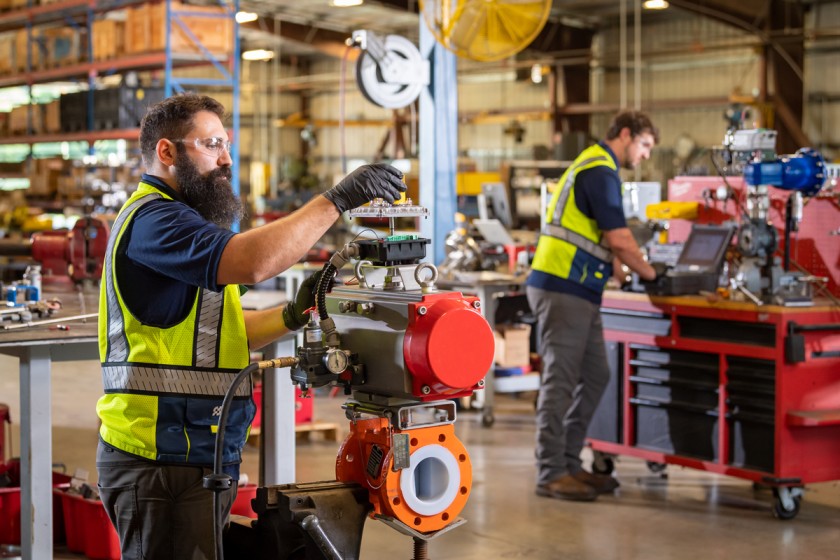
Automation has transformed the way industrial facilities manage fluid systems. Instead of manually opening and closing valves, operators can use electric, pneumatic, or hydraulic actuators to control valve movement.
Actuators can be connected to control systems so that valves respond automatically to signals from sensors or process controllers. This allows facilities to maintain consistent flow conditions while reducing the need for manual intervention.
Electric actuators are often useful where accurate positioning and electrical control are required. Pneumatic actuators are widely used in industrial environments where fast operation and reliable automation are important. Hydraulic actuators can provide high operating force for demanding applications.
When integrated correctly, automated equipment can improve response times and support more consistent process control.
Benefits of Modern Flow Control Solutions
Modern Flow Control Solutions provide several operational advantages when properly designed and maintained. One of the most important benefits is improved process consistency. Accurate flow regulation helps maintain stable operating conditions and can reduce variations that affect production.
Another advantage is equipment protection. Excessive pressure or uncontrolled flow can damage pumps, pipelines, heat exchangers, and other equipment. Proper control helps reduce these risks.
Additional benefits include:
Improved process efficiency
Better pressure management
Reduced fluid wastage
Improved equipment protection
Lower manual intervention
Easier system monitoring
Greater operational reliability
Potential reduction in maintenance requirements
Improved workplace safety
Better control over production processes
The actual benefits depend on system design, component quality, installation practices, and ongoing maintenance.
Applications Across Different Industries
Flow Control Solutions are used across a wide range of industries because almost every process involving liquids or gases requires some form of flow management.
In water and wastewater treatment plants, flow control equipment regulates water movement through filtration, treatment, storage, and distribution systems. In oil and gas facilities, valves and automated systems help manage hydrocarbons, water, steam, and other process fluids.
Chemical processing facilities require carefully selected components because fluids may be corrosive, toxic, or reactive. Power plants use flow control equipment for steam, cooling water, fuel, and other utilities. Manufacturing facilities also rely on controlled fluid movement for cooling, heating, lubrication, cleaning, and production processes.
Food and beverage facilities require hygienic flow control equipment suitable for processing and cleaning operations. Pharmaceutical manufacturing similarly requires carefully controlled systems that support stringent process requirements.
Factors to Consider When Selecting a Flow Control System
Choosing suitable equipment requires more than selecting a valve based on pipeline diameter. Engineers should evaluate the complete operating environment before making a selection.
Fluid type is one of the first considerations. Water, steam, chemicals, gases, oils, and slurries can require completely different materials and valve designs. Operating pressure and temperature are equally important because components must remain reliable under actual process conditions.
Flow rate is another critical factor. A valve that is too large or too small for the application may not provide the desired control characteristics. Engineers should also consider the required level of automation, available power sources, installation space, maintenance requirements, and environmental conditions.
Important selection factors include:
Fluid characteristics
Pipeline size
Operating pressure
Operating temperature
Required flow rate
Valve material
Valve pressure rating
Actuator type
Automation requirements
Maintenance accessibility
Installation environment
Safety requirements
Automation and Smart Monitoring
The development of industrial automation has made flow systems more intelligent and responsive. Modern systems can combine sensors, controllers, automated valves, and digital monitoring platforms to provide real-time information about operating conditions.
Sensors can monitor pressure, temperature, flow rate, and other process parameters. Control systems can then use this information to adjust valves or other equipment automatically. This reduces dependence on manual monitoring and can help operators identify abnormal conditions earlier.
Smart monitoring can also support predictive maintenance. Changes in valve performance, pressure patterns, or flow behavior may indicate developing equipment problems. Detecting these changes early can help maintenance teams plan inspections before a major failure occurs.
Improving Energy Efficiency
Energy consumption is an important consideration in industrial fluid systems. Pumps, compressors, and other equipment can consume significant amounts of energy when systems operate inefficiently.
Correctly designed Flow Control Solutions can help reduce unnecessary pressure losses and improve the overall efficiency of fluid movement. Automated control can also help equipment operate closer to actual process requirements instead of continuously running at maximum capacity.
For example, regulating a pump system according to changing demand can prevent excessive energy consumption. Similarly, properly sized valves can help maintain required flow without creating unnecessary restrictions.
Energy efficiency should therefore be considered during both system design and equipment upgrades. Small improvements across a large industrial network can contribute to meaningful operational savings over time.
Maintenance and Reliability
Even high-quality flow control equipment requires regular inspection and maintenance. Seals, actuators, valve seats, connections, sensors, and other components can experience wear depending on operating conditions.
A preventive maintenance program can include visual inspections, leakage checks, actuator testing, valve operation checks, pressure monitoring, and calibration of instrumentation. The maintenance schedule should be based on equipment specifications and actual operating conditions.
Unexpected valve failure can interrupt production and potentially create safety concerns. Regular maintenance helps identify problems before they become serious. Keeping records of inspections and repairs can also help organizations understand recurring issues and improve future maintenance planning.
Future of Industrial Flow Control
The future of industrial fluid management is closely connected with automation, digitalization, and improved monitoring. Connected sensors and intelligent control systems are expected to provide more detailed information about equipment performance and process conditions.
Data-driven monitoring can help operators identify inefficiencies, detect unusual operating patterns, and schedule maintenance more effectively. Remote monitoring can also provide access to system information without requiring personnel to remain physically near every piece of equipment.
As industrial facilities continue to modernize, integration between mechanical components and digital control platforms will become increasingly important. The objective is not simply to automate individual valves but to create coordinated systems that provide better visibility, control, reliability, and efficiency.
How to Choose the Right Flow Control Provider
Selecting a suitable supplier or engineering partner requires consideration of technical expertise, product range, customization capabilities, and after-sales support. A provider should understand the operating conditions rather than simply supplying standard components.
It is useful to evaluate whether the provider can support valve selection, actuator integration, system design, installation guidance, testing, and maintenance. Product documentation and technical specifications should also be reviewed carefully.
For specialized industrial applications, customization may be necessary to accommodate unusual pressures, temperatures, fluids, pipeline configurations, or automation requirements. Working with an experienced provider can help ensure that components are correctly matched to the application.
Conclusion
Reliable fluid management is fundamental to modern industrial operations. From basic isolation valves to automated control systems and intelligent monitoring technologies, every component contributes to the overall performance of a fluid-handling network. Properly engineered Flow Control Solutions can support process consistency, equipment protection, energy efficiency, safety, and long-term reliability. The best approach depends on the fluid, operating conditions, pipeline design, automation requirements, and maintenance strategy. As industries continue adopting automation and digital monitoring, flow management systems will become increasingly connected and data-driven. By selecting appropriate equipment, maintaining it properly, and designing systems around actual process requirements, industries can build fluid-handling networks that operate efficiently and reliably for years.
Related Posts
- Sep 15, 2026
- SUDE
- 10
Industrial Valve Manufacturer: Engineering Reliable Flow Control Solutions
Explore More