

Double Eccentric Butterfly Dampers

- Damper
- Jun 18, 2026
- 82 Views
Double Eccentric Butterfly Dampers
Double Eccentric Butterfly Dampers: Working Principle, Benefits and Applications
Industrial plants often need to control large volumes of air, flue gas, and process gases under demanding operating conditions. In these systems, the damper must provide reliable flow control while handling pressure, temperature, dust, and continuous operation.
Double eccentric butterfly dampers are designed for applications where low operating torque, reduced sealing wear, and dependable shut-off are important. Also known as double offset butterfly dampers, they use an offset shaft and disc arrangement that reduces contact between the disc and sealing surface during most of the opening and closing movement.
For industries such as power generation, cement, steel, oil and gas, and other process industries, this design can provide an effective solution for both isolation and flow regulation. SUDE Engineering manufactures Double Eccentric Butterfly Dampers under its Series 2000 range for air, flue gas, and process-gas applications.
What Are Double Eccentric Butterfly Dampers?
A double eccentric butterfly damper is a quarter-turn flow-control device in which the shaft is offset from the centreline of the disc and the sealing arrangement. This creates a cam-like movement during operation.
Unlike a conventional concentric butterfly damper, where the disc remains in contact with the seat through a significant portion of its rotation, the double eccentric arrangement allows the disc to move away from the sealing surface quickly after opening begins.
This reduces sliding friction between the sealing surfaces and can help reduce operating torque and seal wear.
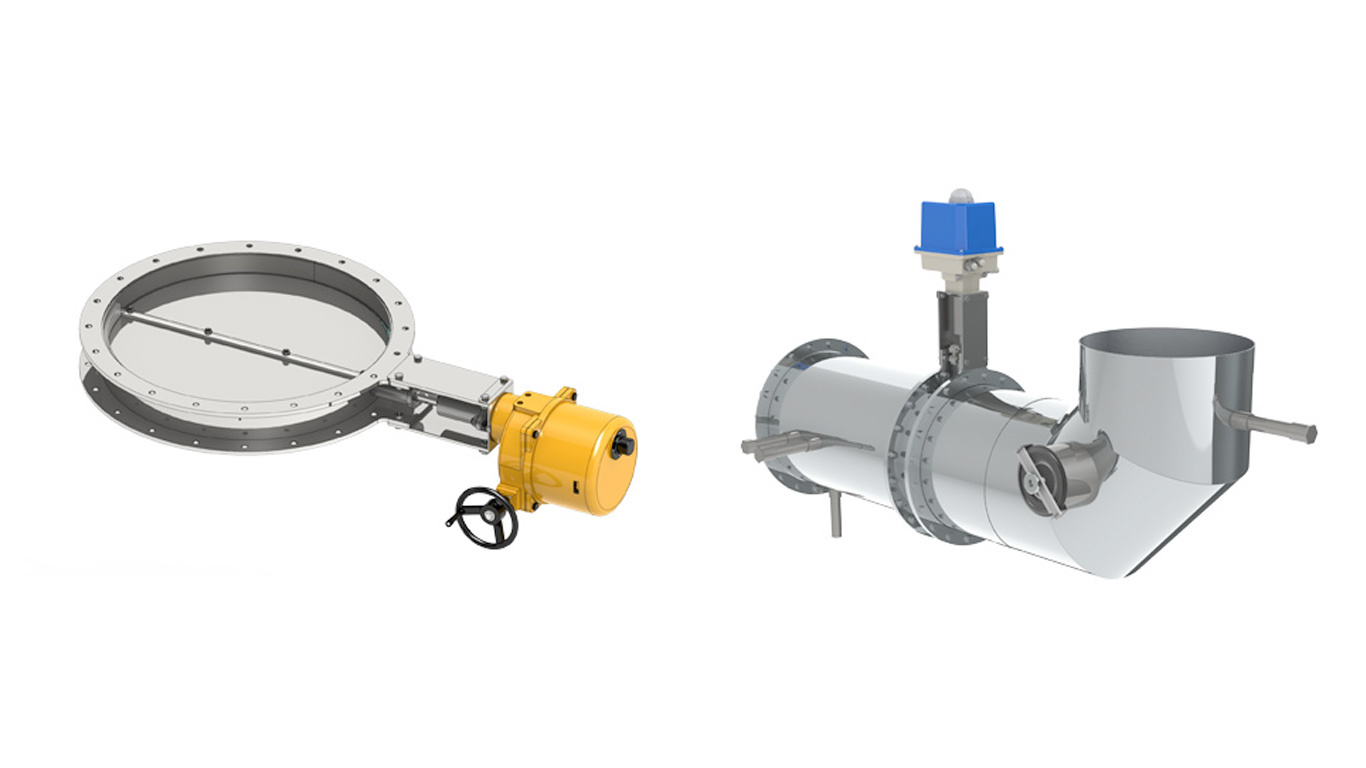
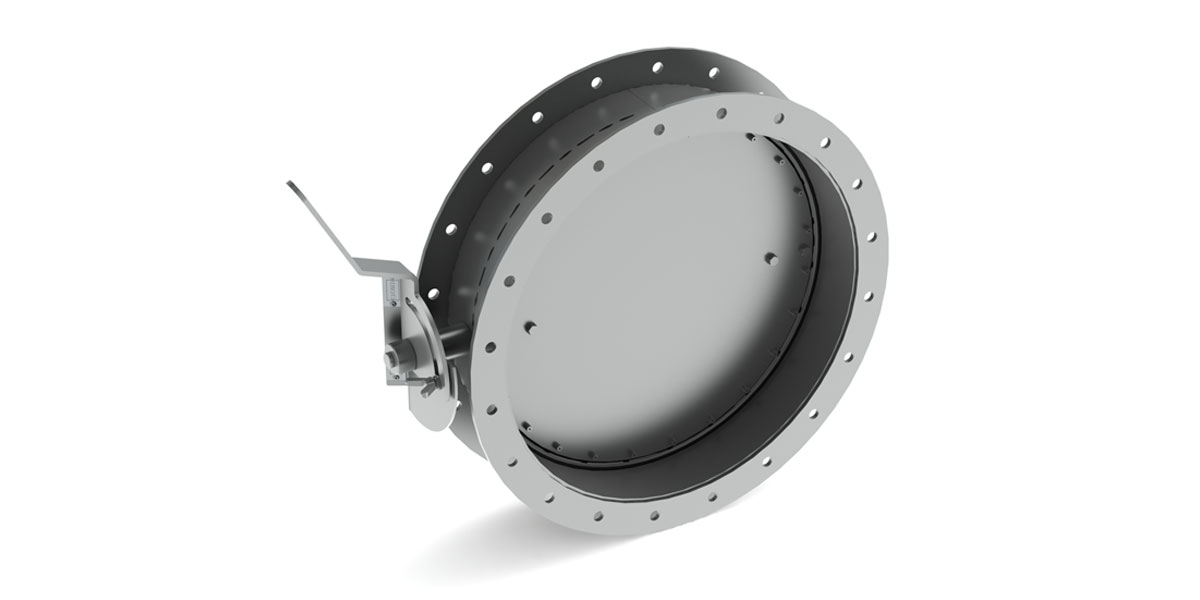
SUDE's Double Eccentric Butterfly Dampers use an offset shaft and disc configuration with an elastic profile seal ring retained by a stainless-steel retaining ring. The company specifies the design for tight shut-off and bidirectional sealing, with zero-leakage options available for critical applications.
How Do Double Offset Butterfly Dampers Work?
The working principle can be understood through three main operating positions.
Open Position
When the damper is open, the disc is positioned away from the sealing surface. Because the disc is offset, continuous rubbing between the disc and seat is reduced.
This lower-contact movement helps minimise friction and can contribute to longer seal life.
Modulating or Throttling Position
During modulation, the disc rotates through its operating range to adjust the amount of air or gas passing through the duct or pipeline.
SUDE specifies a 0° to 90° disc rotation for modulation and throttling applications. The offset arrangement is intended to provide flow control while requiring comparatively low operating torque.
Closed Position
When fully closed, the disc moves into the sealing position and the elastic profile seal engages with the seat.
The resulting arrangement is designed to provide tight shut-off and bidirectional sealing, making the damper suitable for applications where leakage control and isolation are important.
Why Use Double Eccentric Butterfly Dampers?
The double eccentric design offers several advantages for industrial flow-control systems.
1. Reduced Operating Torque
Because the disc disengages from the seat during initial opening, less friction is generated between the sealing surfaces.
Lower operating torque can allow the use of appropriately sized actuators and may help reduce the mechanical load on the operating system.
2. Reduced Seal Wear
Continuous rubbing between the disc and sealing surface can accelerate wear in conventional designs. The offset movement of a double eccentric damper reduces this contact during operation.
This can help extend the service life of the sealing components, particularly when the damper operates frequently.
3. Tight Shut-Off
Certain applications require more than simple flow regulation. They need reliable isolation between process sections.
Double eccentric butterfly dampers can be engineered for tight shut-off, and SUDE's Series 2000 design offers a zero-leakage option for critical applications.
4. Compact Construction
Butterfly-type dampers generally require less installation space than some other flow-control arrangements.
SUDE describes its double eccentric dampers as compact, lightweight, and fabricated in construction, making them suitable for installations where equipment size and weight are important considerations.
5. Suitable for Automation
Modern industrial plants increasingly use automated flow-control systems. A damper may need to respond to remote open-close commands or modulating signals from a plant control system.
Depending on the application, SUDE's double eccentric butterfly dampers can be supplied with manual, electric, pneumatic, or hydraulic actuation.
Double Eccentric Butterfly Dampers vs. Conventional Butterfly Dampers
The main difference is the movement of the disc relative to the sealing surface.
In a conventional concentric butterfly arrangement, the shaft is centred and the disc remains closely associated with the seat during rotation. This can result in greater friction between the sealing surfaces.
A double offset design moves the shaft away from the centreline, producing a cam-like motion. The disc moves away from the seal earlier in the opening cycle and approaches the seat during the final part of closing.
For applications where operating torque, seal wear, and shut-off performance are important, this design can offer meaningful advantages.
The right configuration still depends on the process conditions, temperature, pressure, media, operating frequency, and required leakage performance.
Applications of Industrial Butterfly Dampers
Industrial butterfly dampers are used across a wide range of process industries because of their ability to handle large air and gas flow paths in a relatively compact configuration.
Power Plants
Power-generation systems use dampers to control and isolate air and flue-gas paths. Applications can include boiler systems, exhaust gas systems, air-handling systems, and other process-gas circuits.
SUDE lists Double Eccentric Butterfly Dampers among its products for energy and power-generation applications.
Cement Plants
Cement manufacturing involves high-temperature gases, dust, and continuous process operation. Flow-control equipment may be required across kiln, preheater, cooler, exhaust-gas, and other process systems.
SUDE's cement and steel industry portfolio includes Double Eccentric Butterfly Dampers along with several other damper configurations for industrial process applications.
Steel Plants
Steel manufacturing involves demanding thermal and process conditions where reliable isolation and flow regulation are essential.
SUDE lists Double Eccentric Butterfly Dampers alongside Check Dampers, Stack Dampers, Throttle Dampers, Variable Inlet Vane Dampers, and other flow-control equipment for steel and metallurgical applications.
Oil and Gas
Oil and gas facilities use industrial dampers and flow-control equipment in a variety of air, exhaust, ventilation, and process systems.
SUDE's oil and gas industry portfolio includes Double Eccentric Butterfly Dampers among its damper solutions.
Pharmaceutical and Process Industries
Flow control can also be required in process plants where accurate regulation and reliable isolation are important. SUDE identifies pharmaceutical and process industries among the application areas for its double eccentric damper range.
Key Specifications to Consider
Selecting the right double eccentric damper requires more than choosing the nominal diameter. Engineers should evaluate the complete operating environment.
Flow Media
The composition and characteristics of the media should be established first. SUDE specifies its Series 2000 dampers for air, flue gas, and process gases.
Temperature
Temperature has a direct effect on material selection, sealing performance, shaft components, and actuator requirements.
SUDE lists a temperature range of -30°C to +300°C for its Series 2000 Double Eccentric Butterfly Dampers. Actual suitability should always be confirmed against the specific application conditions and design specification.
Pressure Rating
Pressure and differential pressure affect the mechanical design and operating torque.
The SUDE Series 2000 range is listed with pressure ratings from PN 1 to PN 25, depending on configuration.
Size
Large industrial ducts and gas-handling systems often require large damper diameters.
SUDE lists sizes from 150 mm to 4000 mm for its Series 2000 range.
Material of Construction
Material selection should consider temperature, media, pressure, corrosion, and mechanical loading.
SUDE lists construction options including IS 2062 / ASTM A36, IS 2002 / ASTM A516 Grade 70, SS304/316, Inconel 625, and Hastelloy C276/C22, depending on application requirements.
Actuation
The actuator should be selected based on damper size, operating torque, frequency, speed, control philosophy, and available utilities.
Available options in the SUDE range include manual, electric, pneumatic, and hydraulic drives.
How to Select a Butterfly Damper Manufacturer
Choosing the right butterfly damper manufacturer is an important part of ensuring long-term system performance.
A suitable manufacturer should be able to understand the actual operating conditions rather than selecting a damper only from nominal diameter and pressure.
Before placing an order, industrial buyers should consider:
Application and process conditions
Media and dust characteristics
Operating and maximum temperature
Pressure and differential pressure
Required leakage performance
Frequency of operation
Manual or automated operation
Material and seal compatibility
Required testing and inspection
Maintenance and replacement requirements
Engineering capability is particularly important when the damper is being used in a high-temperature, high-cycle, abrasive, or critical isolation application.
SUDE Engineering states that it has more than 40 years of engineering experience and specialises in dampers, valves, and actuators. Its manufacturing facilities include Alandi, Pune, with operations serving customers in India and international markets.
Why Choose SUDE for Double Eccentric Butterfly Dampers?
SUDE Engineering's Double Eccentric Butterfly Dampers are engineered for industrial flow-control applications requiring reliable shut-off, flow regulation, and long service life.
The Series 2000 range combines a double offset design with an elastic profile seal arrangement. SUDE also highlights fabricated construction, replaceable seals and discs, multiple actuation options, and in-house testing for leakage, strength, and endurance.
The range can be configured for different industrial applications, including power generation, steel and cement, oil and gas, and pharmaceutical industries.
Conclusion
Double eccentric butterfly dampers are designed to provide controlled and reliable movement of air, flue gas, and process gases in demanding industrial systems. Their double offset geometry reduces disc-to-seat friction during operation, which can help reduce operating torque and sealing wear while supporting dependable shut-off.
For industrial users, the correct damper should be selected according to the actual application, including temperature, pressure, media, size, leakage requirements, materials, operating frequency, and actuator configuration.
For projects requiring robust industrial butterfly dampers, working with an experienced butterfly damper manufacturer can help ensure the equipment is properly matched to the process.
SUDE Engineering provides engineered Double Eccentric Butterfly Dampers for demanding industrial applications, with configurations available for manual, electric, pneumatic, and hydraulic operation.
Explore SUDE Engineering Double Eccentric Butterfly Dampers:
https://www.sudeengg.com/product/double-eccentric-butterfly-dampers
Related Posts
- Sep 30, 2026
- SUDE
- 10
Industrial Butterfly Dampers: Efficient Flow Control for Industries
Explore More
- Sep 18, 2026
- SUDE
- 10