
Butterfly Damper Manufacturer for Reliable Industrial Airflow Control
- Damper
- Sep 18, 2026
- 5 Views
Butterfly Damper Manufacturer for Reliable Industrial Airflow Control
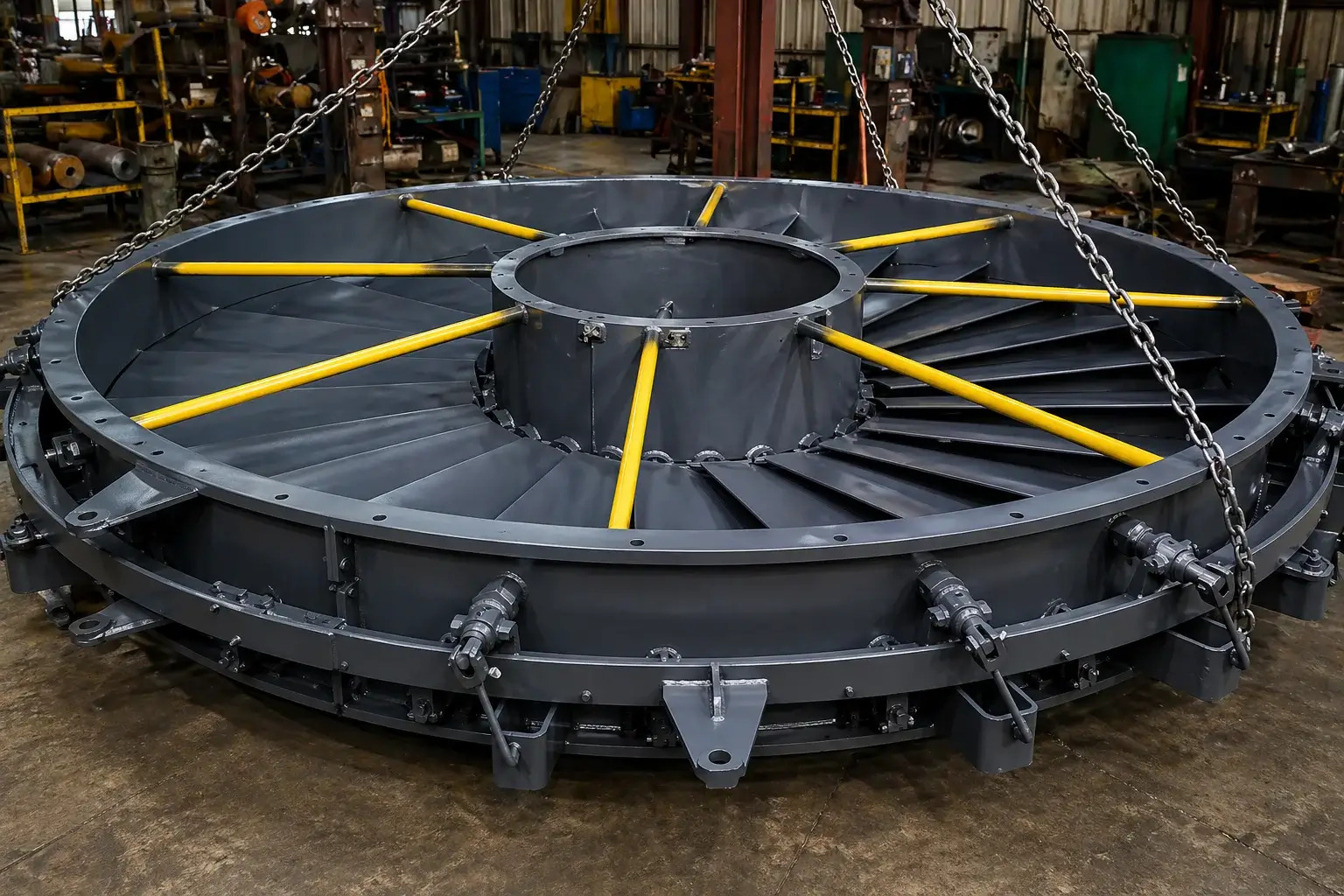
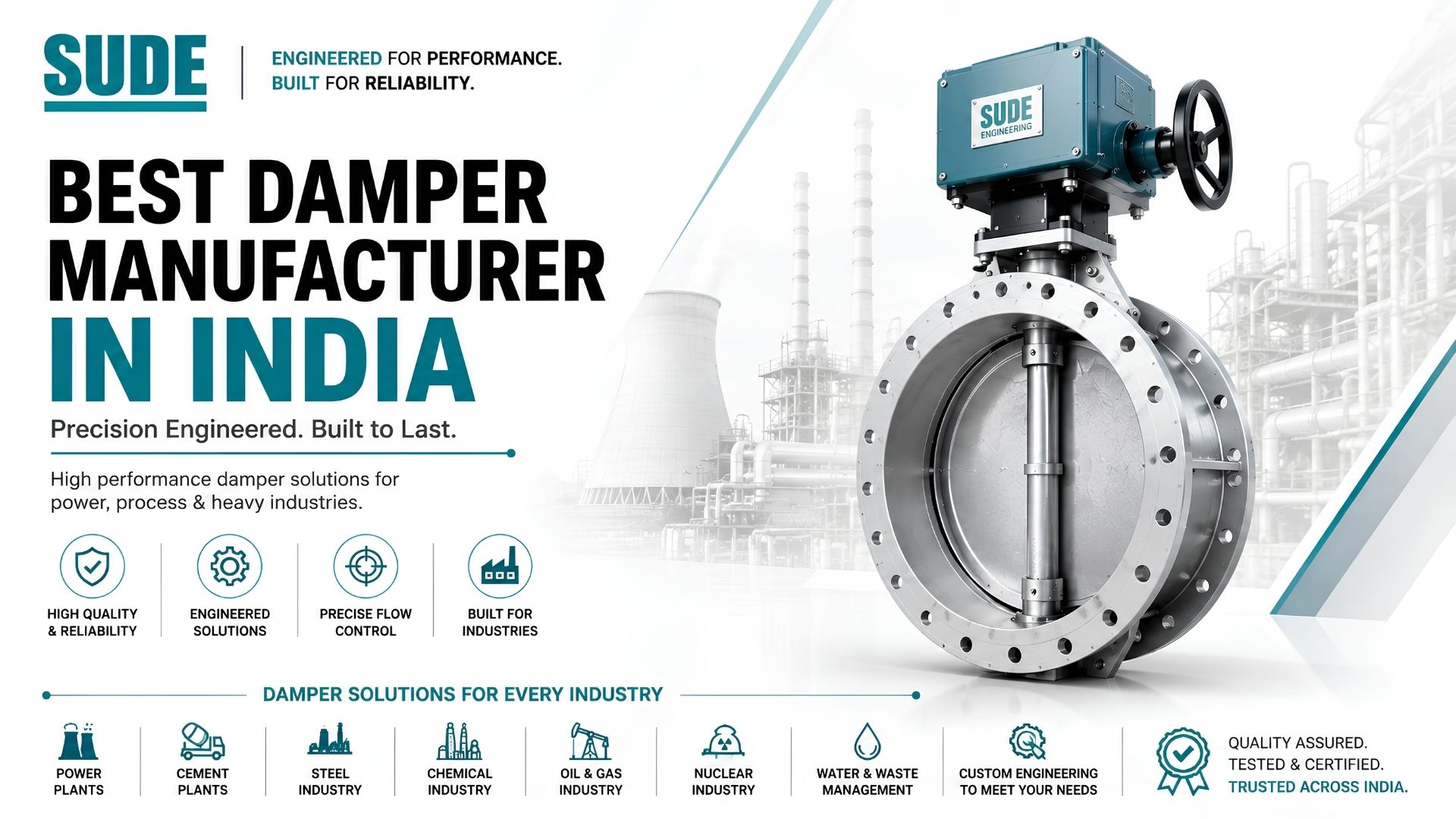
Industrial ventilation and airflow systems require dependable components to regulate, isolate, and control the movement of air and gases. Dampers play an important role in these systems because they help control airflow while supporting efficient operation and system safety. Among the different types available, butterfly dampers are widely used because of their simple construction, compact design, and effective control characteristics. A reliable Butterfly Damper Manufacturer focuses on producing equipment that can withstand demanding operating environments while delivering consistent performance.
Butterfly dampers are commonly installed in HVAC systems, industrial ventilation networks, process plants, dust collection systems, power plants, cement facilities, chemical industries, and other applications where airflow regulation is necessary. Their design generally consists of a circular or rectangular body with a rotating disc that controls the passage of air or gas. Depending on the application, these dampers can be manually operated or equipped with pneumatic or electric actuators. Selecting the correct damper requires consideration of temperature, pressure, media, size, material, and operating conditions.
What Is a Butterfly Damper?
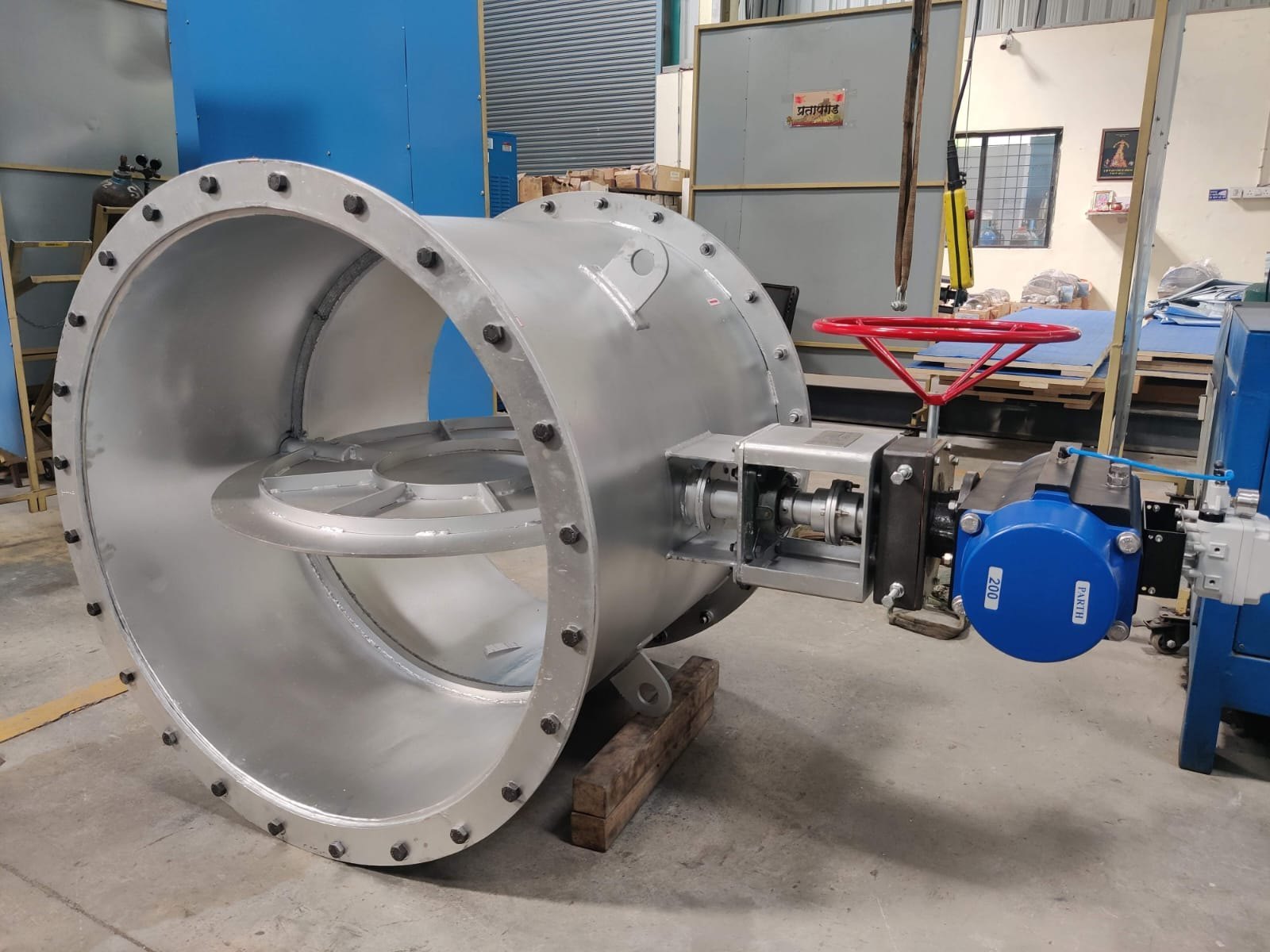
A butterfly damper is a mechanical device designed to regulate or stop the flow of air, gas, or other gaseous media through a duct or pipeline. It uses a rotating disc mounted on a shaft. When the disc rotates, it changes the opening available for airflow. In a fully open position, the disc allows maximum passage, while rotating the disc toward the closed position restricts or stops the flow.
The basic construction makes butterfly dampers relatively lightweight and compact compared with some other airflow-control devices. They can be manufactured in different sizes and materials depending on the system requirements. Carbon steel, stainless steel, cast materials, and other specialized alloys may be used for different industrial environments. Surface coatings can also be applied when additional corrosion or temperature resistance is required.
The simplicity of this design makes butterfly dampers suitable for applications where reliable airflow control, isolation, or shut-off is required. They can also be integrated with automation systems through electric or pneumatic actuators, allowing operators to control airflow remotely.
How Does a Butterfly Damper Work?
The operating principle of a butterfly damper is straightforward. A circular plate, commonly called the disc, is connected to a shaft positioned through the center of the damper body. When the shaft rotates, the disc changes its position relative to the airflow path.
When the disc is aligned with the airflow, resistance is minimized and a greater volume of air can pass through the duct. As the disc rotates, it progressively restricts the opening. This allows the damper to regulate airflow according to the requirements of the system. When completely closed, the disc blocks most or all of the available passage depending on the specific damper design and sealing arrangement.
Manual butterfly dampers may use handles, levers, or gear mechanisms for operation. Automated models can use pneumatic or electric actuators. The actuator can receive a control signal from a control panel, PLC, building management system, or other automation equipment. This provides greater control over industrial processes and ventilation systems.
Applications of Butterfly Dampers
Butterfly dampers are used across many industries because airflow and gas-flow management are essential to numerous processes. HVAC systems use them to regulate air distribution, isolate duct sections, and manage ventilation. Industrial plants may use them for process-air control, exhaust systems, combustion-air management, and dust extraction.
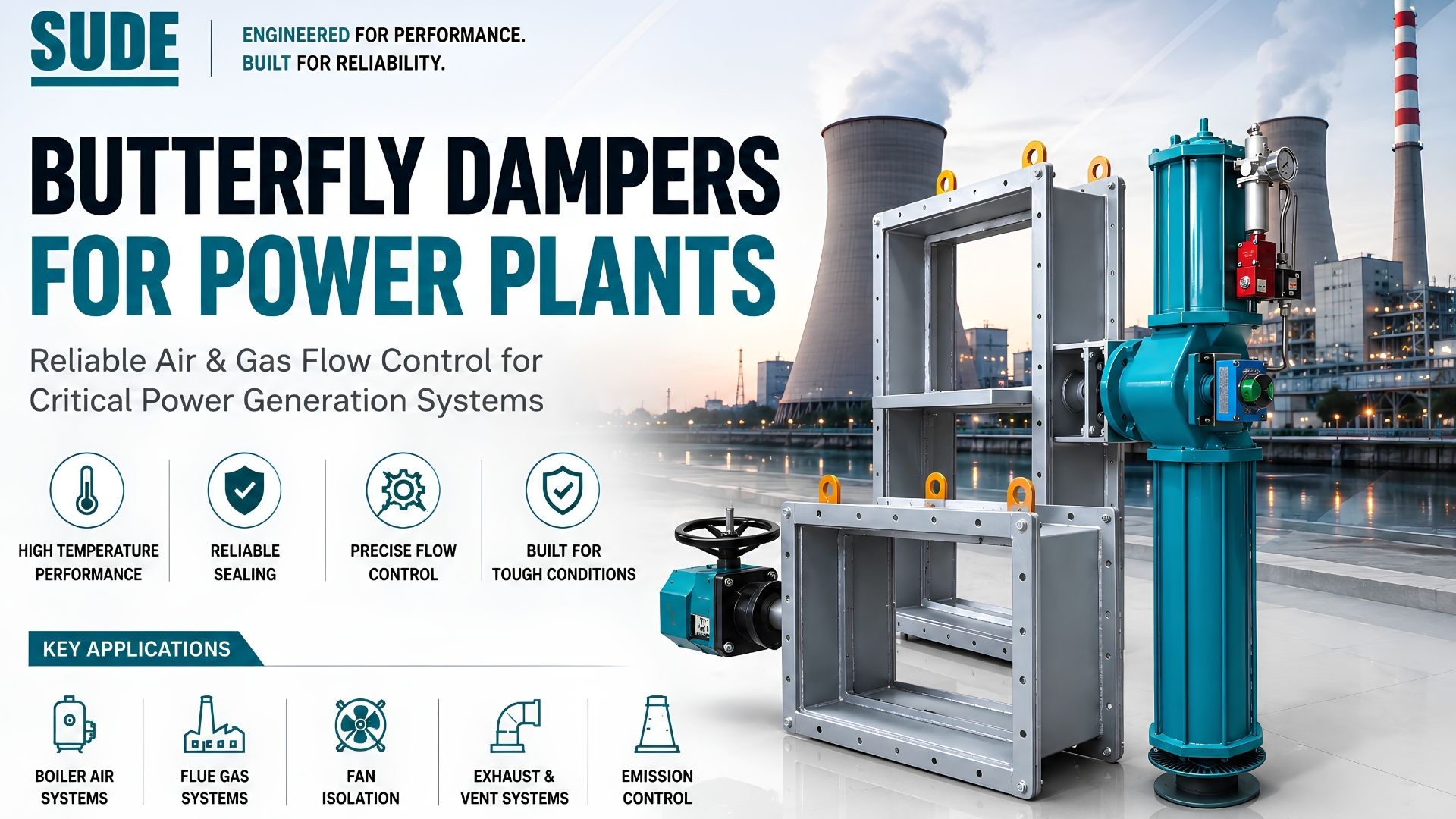
Power generation facilities can use dampers in air and flue-gas systems. Cement and mineral-processing plants may require them for controlling dusty and abrasive air streams. Chemical and manufacturing industries use specialized versions for process ventilation and gas handling. Food-processing facilities may also use suitable dampers in ventilation and material-handling systems.
Common applications include:
HVAC and commercial ventilation systems
Industrial exhaust systems
Dust collection equipment
Cement and mineral processing
Power generation plants
Chemical processing facilities
Steel and metal industries
Furnace and combustion systems
Pharmaceutical manufacturing
Industrial air handling units
Pollution-control equipment
Process ventilation systems
The appropriate damper design depends on the operating conditions and the characteristics of the medium being controlled.
Advantages of Butterfly Dampers
One of the major advantages of butterfly dampers is their compact construction. They generally require less installation space than many traditional flow-control devices. Their relatively low weight can also simplify transportation, installation, and maintenance.
Another advantage is their quick operation. A rotating disc can move from an open to a closed position with a relatively small amount of movement. When fitted with an actuator, this characteristic can support automated control and fast isolation.
Key benefits include:
Compact and space-saving construction
Simple operating mechanism
Quick opening and closing
Easy integration with actuators
Low maintenance requirements
Availability in multiple sizes
Different material options
Suitable for manual or automated operation
Flexible installation possibilities
Effective airflow regulation
Types of Butterfly Dampers
Butterfly dampers are available in different configurations to meet specific system requirements. Manual butterfly dampers are operated using handles, levers, or gear mechanisms and are generally suitable where frequent remote adjustment is not necessary.
Pneumatic butterfly dampers use compressed air to operate the disc. They are often selected for industrial automation because pneumatic actuators can provide rapid movement and reliable operation. Electric butterfly dampers use electric actuators and can be integrated with automated control systems, making them useful for applications requiring precise remote control.
Heavy-duty butterfly dampers are designed for demanding industrial conditions where high temperatures, pressure variations, abrasive particles, or corrosive gases may be present. Specialized materials and sealing systems can improve performance under such conditions.
Common Butterfly Damper Types
Damper Type | Operating Method | Typical Application | Main Benefit |
|---|---|---|---|
Manual | Handle or lever | Basic ventilation | Simple operation |
Gear Operated | Gear mechanism | Larger dampers | Easier manual control |
Pneumatic | Compressed air | Industrial automation | Fast operation |
Electric | Electric actuator | Automated systems | Remote control |
Heavy Duty | Manual or actuator | Industrial processes | Robust construction |
High Temperature | Actuator/manual | Furnaces and hot air | Temperature resistance |
Stainless Steel | Manual/automatic | Corrosive environments | Corrosion resistance |
Importance of Material Selection
Material selection has a direct influence on the service life and performance of a damper. The material should be selected according to temperature, pressure, moisture, corrosive conditions, and the characteristics of the air or gas passing through the system.
Carbon steel is commonly used for general industrial applications where high corrosion resistance is not the primary requirement. Stainless steel may be preferred in environments exposed to moisture, chemicals, or corrosive gases. Specialized alloys can be considered for high-temperature or aggressive industrial applications.
The disc, shaft, body, bearings, and sealing components may all require different material considerations. A professional Butterfly Damper Manufacturer evaluates these factors before recommending a suitable configuration. Correct material selection can help reduce premature wear, maintenance requirements, and unexpected equipment failure.
Butterfly Damper Design Considerations
Proper damper design begins with understanding the application. Engineers typically consider duct size, airflow volume, operating temperature, pressure, medium characteristics, installation orientation, required leakage performance, and frequency of operation.
The required torque is another important factor, especially when an actuator is being selected. An actuator that is too small may struggle to move the disc reliably, while an unnecessarily large actuator can increase system cost and energy consumption.
Sealing requirements should also be considered. Some applications require tight shut-off, while others primarily need airflow regulation. The correct sealing arrangement should therefore be selected according to the actual purpose of the damper.
Other important considerations include:
Duct or pipeline dimensions
Operating temperature
Operating pressure
Air or gas characteristics
Corrosion potential
Required flow capacity
Disc material
Body material
Shaft design
Seal material
Actuator torque
Manual or automated operation
Installation environment
Role of Actuators in Butterfly Dampers
Actuators convert an external energy source into mechanical movement that rotates the damper disc. Depending on the application, actuators may be manual, pneumatic, electric, or other specialized designs.
Electric actuators are useful when a damper needs to be controlled from a centralized location. They can be connected to control panels and automation systems. Pneumatic actuators are often selected for industrial environments where compressed air is readily available and rapid operation is required.
Actuator selection should be based on the required torque, operating cycle, control signal, environmental conditions, and fail-safe requirements. Additional accessories such as position indicators, limit switches, solenoid valves, and feedback systems can also be integrated into automated damper assemblies.
Quality Standards and Manufacturing
Quality manufacturing is important because dampers often operate continuously or under demanding environmental conditions. A dependable Butterfly Damper Manufacturer should maintain controlled manufacturing processes covering material selection, fabrication, machining, assembly, finishing, and testing.
Dimensional accuracy is particularly important because incorrect dimensions can create installation difficulties or affect airflow performance. Shaft alignment, disc positioning, sealing surfaces, and actuator mounting should be checked during production.
Testing procedures may include dimensional inspection, operational testing, leakage testing, pressure testing, and actuator performance verification, depending on the application and required specifications. Proper documentation can also help customers verify that the supplied equipment matches the required technical parameters.
Maintenance of Butterfly Dampers
Regular maintenance can help extend the service life of butterfly dampers and reduce unexpected operational problems. Inspection frequency depends on operating conditions and the criticality of the application.
During routine maintenance, operators should inspect the disc, shaft, bearings, seals, actuator, mounting hardware, and external body condition. Dust accumulation and corrosion should be addressed where applicable. Automated dampers should also be checked for proper actuator movement and feedback signals.
Lubrication requirements vary according to the damper design and bearing arrangement. Maintenance personnel should follow the manufacturer's recommendations rather than applying unsuitable lubricants.
A basic maintenance program may include:
Visual inspection
Checking for corrosion
Inspecting seals
Checking shaft movement
Testing actuator operation
Checking mounting bolts
Inspecting electrical connections
Removing excessive dust or deposits
Monitoring unusual noise or vibration
Recording maintenance activities
How to Choose a Butterfly Damper Manufacturer
Selecting the right supplier is an important step when purchasing industrial dampers. Buyers should evaluate manufacturing capabilities, product specifications, customization options, material availability, testing procedures, technical support, and after-sales service.
A suitable Butterfly Damper Manufacturer should be able to understand the application rather than simply supplying a standard product. For complex industrial installations, technical consultation can help determine the appropriate body material, disc design, seal arrangement, actuator, and operating configuration.
Customers should also request technical documentation such as product drawings, dimensions, material specifications, operating information, and testing details where necessary. Comparing technical suitability rather than focusing only on initial purchase price can help businesses select equipment appropriate for their operating environment.
Butterfly Damper vs Other Flow-Control Devices
Butterfly dampers are one of several solutions used to control air and gas flow. The best choice depends on the application. Louvers may be preferred for certain ventilation applications, while slide gates can be useful for specific particulate-handling systems. Control valves are commonly used for liquid and certain gas applications where different flow characteristics are involved.
Butterfly dampers are particularly useful when a compact rotating mechanism is preferred. Their design can provide efficient isolation and airflow control without requiring excessive installation space.
Feature | Butterfly Damper | Louver Damper | Slide Gate |
|---|---|---|---|
Design | Rotating disc | Multiple blades | Sliding plate |
Space Requirement | Compact | Moderate | Moderate |
Operation | Manual/Automatic | Manual/Automatic | Manual/Automatic |
Automation | Easy | Easy | Available |
Typical Use | Air/gas control | Ventilation | Isolation/material handling |
Maintenance | Generally simple | Moderate | Application dependent |
Benefits of Working With an Experienced Manufacturer
Experience can make a significant difference when equipment must operate in challenging industrial environments. An experienced Butterfly Damper Manufacturer can provide different configurations based on the application's technical requirements instead of relying on a single standardized design.
Manufacturers with established engineering processes can also assist with actuator sizing, material selection, dimensions, sealing requirements, and installation considerations. This technical support can be valuable for projects involving multiple dampers or complex ventilation and process-control systems.
Customization is another important benefit. Industrial systems may have unique dimensions, temperature ranges, pressure requirements, or control-system specifications. A manufacturer capable of producing customized dampers can help accommodate these requirements while maintaining compatibility with the overall system.
Industrial Efficiency and Energy Management
Proper airflow control can contribute to efficient industrial operation. If air is allowed to move unnecessarily through a system, fans and other equipment may consume more energy than required. Dampers can help regulate airflow according to process requirements and isolate sections that are not currently in use.
However, damper selection should consider the pressure drop associated with the equipment. A properly designed system balances airflow requirements with resistance through the ductwork and damper assembly.
Future Trends in Damper Technology
Industrial automation is influencing the development of modern airflow-control equipment. Electric actuators, remote monitoring, digital control systems, and feedback mechanisms are increasingly being integrated into industrial damper systems.
Smart control systems can provide information about damper position and operating status. When connected to a broader industrial automation platform, this information can support centralized monitoring and maintenance planning.
Why Customization Matters
Industrial applications rarely have identical operating conditions. A damper designed for a clean-air HVAC system may not be suitable for a high-temperature process or abrasive dust-handling application. Customization allows the equipment to be designed around the actual requirements of the system.
Customization may involve damper dimensions, body construction, disc thickness, shaft design, sealing materials, surface coatings, actuator selection, mounting arrangements, and control accessories.
Conclusion
Butterfly dampers provide a practical solution for controlling and isolating air and gas flow across a wide range of industrial applications. Their compact construction, straightforward operating principle, flexible actuation options, and availability in different materials make them useful for HVAC, ventilation, manufacturing, power generation, chemical processing, dust collection, and other industries.
Choosing the right Butterfly Damper Manufacturer requires attention to more than product availability. Buyers should consider manufacturing quality, materials, operating conditions, actuator compatibility, customization capabilities, testing procedures, maintenance requirements, and technical support. With the correct design and installation, butterfly dampers can provide dependable airflow management and support efficient industrial operations for many years.
Related Posts