

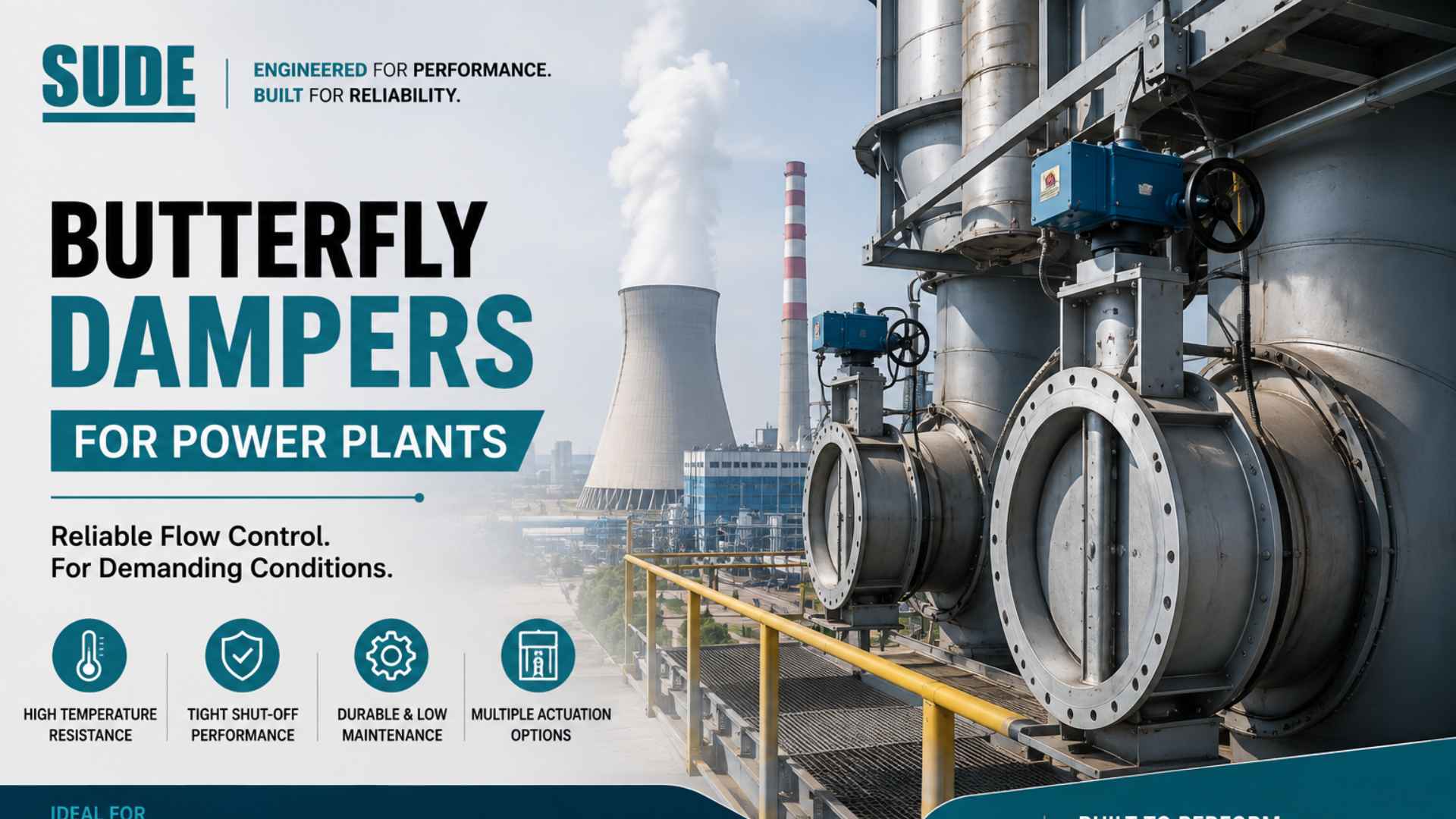
Butterfly Dampers for Power Plants
- Damper
- Jul 15, 2026
- 156 Views
Butterfly Dampers for Power Plants
Butterfly Dampers for Power Plants: Applications, Benefits and Selection Guide
Power generation facilities operate under demanding conditions where temperature, pressure, gas flow, emissions control, and continuous operation all have to be managed reliably. In thermal and other process-intensive power plants, dependable flow control is essential for maintaining plant efficiency, protecting equipment, and supporting safe operation.
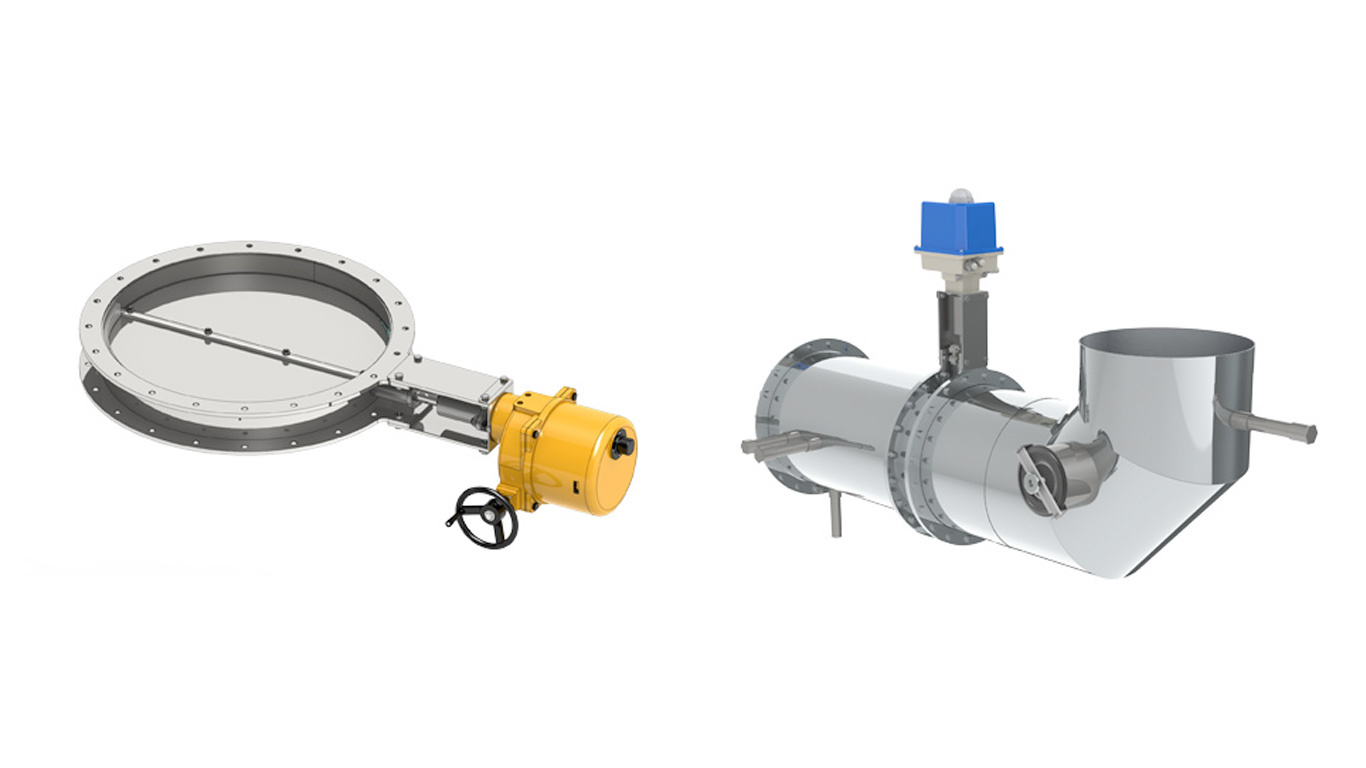
Butterfly dampers for power plants are used to control, regulate, or isolate air and flue-gas paths throughout these systems. Their quarter-turn operating principle, compact construction, and compatibility with electric, pneumatic, hydraulic, or manual actuation make them suitable for a wide range of industrial flow-control applications.
The right damper, however, depends on the actual service conditions. Temperature, pressure, gas composition, leakage requirements, duct size, operating frequency, and actuator configuration all need to be evaluated before selecting a solution.
SUDE Engineering manufactures industrial dampers and lists Butterfly Dampers and Double Eccentric Butterfly Dampers among its power-generation solutions. Its current power-generation portfolio also includes Check Dampers, Stack Dampers, Throttle Dampers, Air Dampers, Isolation Dampers, Variable Inlet Vane Dampers, and other flow-control equipment.
What Are Butterfly Dampers for Power Plants?
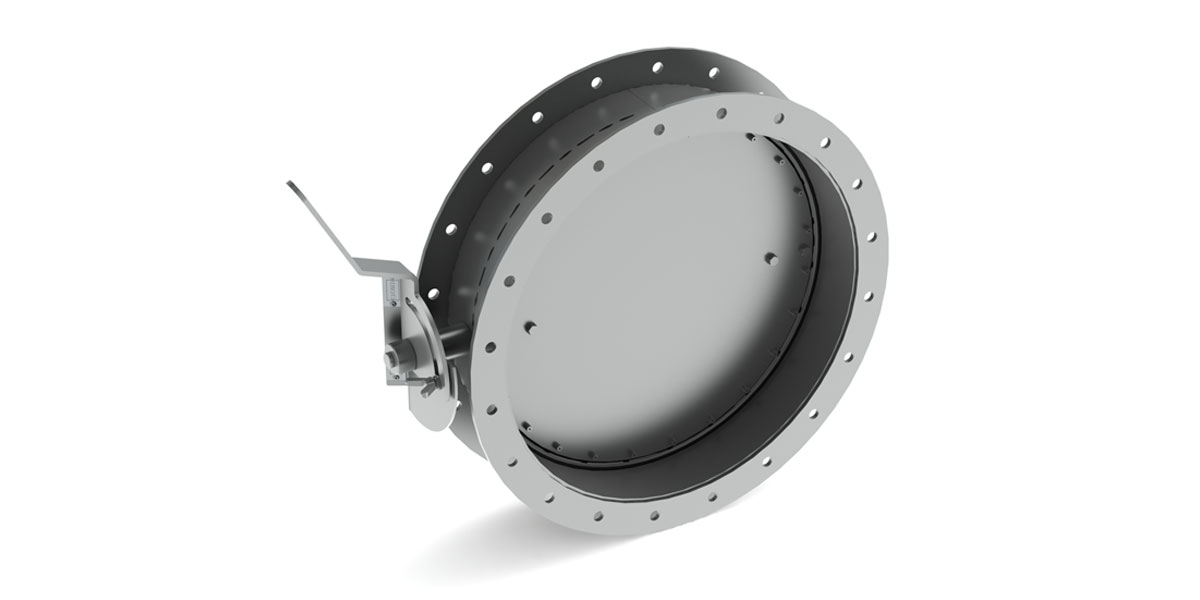
A butterfly damper uses a rotating disc to control the movement of air or gas through a duct or process line.
The disc rotates through a quarter turn between open and closed positions. In the open position, the disc is aligned with the flow path. As it rotates toward the closed position, it restricts the available flow area until the passage is isolated.
In power-generation systems, this basic mechanism can be used for:
Airflow regulation
Flue-gas control
Equipment isolation
Process-gas diversion
Start-up and shutdown sequences
Maintenance isolation
Automated flow control
The specific duty determines whether the damper should be designed primarily for isolation, modulation, throttling, or a combination of these functions.
Why Are Dampers Important in Power Generation?
Power-generation plants can operate continuously at high temperatures and pressures. Flue-gas handling and air systems can also involve large flow volumes, pressure variations, dust, and corrosive or chemically aggressive components.
SUDE describes power-generation environments as involving extreme temperature, pressure, and continuous-duty conditions. Its industry information specifically identifies high-temperature steam, flue-gas handling, pressure variations, and continuous operation as important engineering challenges.
A reliable damper can help manage these conditions by providing controlled movement and isolation of process gases.
Flow Control
A damper can regulate the amount of air or gas moving through a process path. This can be useful where airflow needs to be matched to changing operating conditions.
Isolation
During maintenance or abnormal operating conditions, a damper can isolate one section of the system from another.
Equipment Protection
Correctly designed isolation and non-return arrangements can help protect fans, ducts, heat-recovery equipment, emission-control systems, and other connected equipment from unwanted flow conditions.
Automation
Automated dampers can be connected to the plant's control architecture, allowing remote operation, position control, and process interlocking. SUDE states that its power-generation solutions are designed for integration with modern automation systems and remote operation.
Where Are Industrial Butterfly Dampers Used in Power Plants?
The exact arrangement differs between plant designs, but industrial butterfly dampers can be used in several air and gas-handling applications.
Boiler and Combustion Air Systems
Combustion systems require controlled air supply to support stable operation. Dampers can be used to regulate or isolate air paths depending on the process configuration.
The damper must be selected according to airflow, pressure, temperature, operating frequency, and the required control range.
Flue-Gas Systems
Flue-gas handling is one of the most demanding damper applications in power generation.
Gas temperatures, particulate loading, pressure conditions, and chemical composition can influence the required material, sealing system, shaft arrangement, and construction.
SUDE specifically lists flue gas among the media handled by its Double Eccentric Butterfly Damper Series 2000.
Stack and Exhaust Systems
Stack systems need reliable control and isolation of exhaust gases.
SUDE's power-generation portfolio includes Stack Dampers as well as Butterfly Dampers and Double Eccentric Butterfly Dampers, allowing the damper configuration to be selected according to the application.
Air and Ventilation Systems
Power plants also contain extensive ventilation and air-handling systems. Depending on the application, butterfly or other damper designs can be used to control or isolate airflow.
Fan and Gas-Handling Equipment
Dampers can be installed around fans and connected ductwork to manage flow, isolate equipment, or support specific operating sequences.
Double Eccentric Butterfly Dampers for Power Plants
For more demanding applications, a double eccentric design can provide advantages compared with a conventional concentric arrangement.
In SUDE's Series 2000 design, the shaft and disc are offset so that the sealing ring remains unstressed in the open position. During operation, the disc disengages from the sealing surface with minimal rotation, reducing friction between the sealing components.
This can provide several practical benefits.
Lower Operating Torque
Reduced friction between the disc and sealing surface can lower the operating torque required to move the damper.
This can help when selecting an actuator and may reduce the mechanical load on the operating system.
Reduced Seal Wear
Because the disc separates from the sealing surface quickly after opening, unnecessary rubbing is reduced.
This can help extend seal life, particularly in applications where the damper cycles regularly.
Tight Shut-Off
SUDE states that its Series 2000 Double Eccentric Butterfly Dampers provide tight shut-off in both directions, with a zero-leakage option for critical applications.
Modulating Capability
The design can be used not only for on-off isolation but also for regulating and throttling applications. SUDE specifies 0°–90° disc movement for modulation and throttling.
High Temperature Dampers for Power Plants
Temperature is one of the most important factors when selecting high temperature dampers.
A power plant damper is not defined as high-temperature capable simply because its body is made from a particular metal. The complete assembly has to remain suitable for the actual operating environment.
Important components include:
Body
Disc
Shaft
Seals
Bearings
Retaining components
Actuator
Insulation or thermal arrangement where applicable
The required material and design depend on both normal and maximum temperature.
For example, SUDE's Series 2000 Double Eccentric Butterfly Dampers are currently specified for -30°C to +300°C, with material options including carbon steel grades, stainless steels, Inconel 625, and Hastelloy grades depending on the application.
This does not mean every power-plant application falls within that range. Where temperatures or process conditions exceed the standard configuration, the manufacturer should review the application and recommend a suitable engineered design.
What Factors Should Be Considered When Selecting Power Plant Dampers?
A reliable selection process begins with the operating data.
1. Temperature
Determine:
Normal operating temperature
Maximum operating temperature
Start-up temperature
Shutdown conditions
Temperature variations
Thermal expansion and seal performance should also be considered.
2. Pressure
Pressure and differential pressure affect:
Damper torque
Structural loading
Seat performance
Actuator sizing
Required leakage performance
The manufacturer's pressure rating should be evaluated against the actual service conditions.
SUDE's Series 2000 range lists pressure classes from PN 1 through PN 25 depending on configuration.
3. Gas or Air Composition
The media can affect material compatibility.
Flue gases may contain moisture, particulates, sulfur compounds, and other components that influence corrosion and wear. Material selection therefore needs to be based on the actual gas composition and operating temperature.
4. Leakage Requirement
Not every application requires the same level of tightness.
A damper used for simple flow regulation may have different leakage requirements from one used to isolate critical process equipment.
Performance requirements should therefore be specified before selecting the damper.
5. Flow Velocity and Pressure Drop
An industrial butterfly damper should not be selected purely by duct diameter.
Flow velocity and pressure drop affect damper sizing, torque, structural loading, and plant efficiency.
AMCA's damper application literature treats leakage, pressure drop, dynamic performance, operating temperature, and operating torque as important damper performance considerations.
6. Operating Frequency
A damper that operates only during maintenance may have very different requirements from one that cycles continuously or modulates during normal operation.
The expected number of cycles can influence:
Seal selection
Bearing design
Shaft design
Actuator selection
Maintenance requirements
7. Installation Orientation
Damper orientation can affect actuator arrangement, shaft loading, drainage, and access for inspection and maintenance.
The installation arrangement should therefore be included in the technical specification.
Electric, Pneumatic or Hydraulic Actuation?
The damper and actuator should be treated as one operating system.
Electric Actuation
Electric actuators can be useful where power is available and the damper must be operated remotely or integrated into an automated control system.
They are suitable for applications requiring controlled positioning, feedback, and automated sequences.
Pneumatic Actuation
Pneumatic actuators can provide fast operation and are widely used where compressed air is readily available.
They can be configured for different operating and fail-safe requirements.
Hydraulic Actuation
Hydraulic actuation can be considered for large dampers or applications requiring high operating torque.
SUDE specifically lists hydraulic actuation as an option for its Series 2000 Double Eccentric Butterfly Dampers and identifies it as suitable for high-torque and large-size dampers.
Manual Operation
Manual operation can be appropriate for smaller or infrequently operated applications where remote operation is not necessary.
Butterfly Dampers vs. Other Power Plant Damper Designs
Not every power-plant application should use a butterfly damper.
Depending on the duty, engineers may require:
Check Dampers
Stack Dampers
Throttle Dampers
Isolation Dampers
Diverter Dampers
Guillotine Dampers
Variable Inlet Vane Dampers
Multi-Louvre Dampers
SUDE's current Power Generation portfolio includes these and other damper configurations.
The right choice depends on whether the application requires regulation, isolation, non-return operation, diversion, large-area airflow control, or another specialised function.
Butterfly Dampers vs. Butterfly Valves
The terms can sometimes be confused because both use a rotating disc.
A butterfly valve is generally associated with piping systems carrying liquids or gases, whereas a butterfly damper is commonly used for air and gas handling in ducts, stacks, and process systems.
The application, pressure, temperature, duct or pipe arrangement, sealing requirements, and applicable standards determine which device is appropriate.
For power-plant flue-gas and air-handling systems, the damper is often the more appropriate flow-control device.
Testing and Performance of Industrial Butterfly Dampers
Testing is an important part of industrial damper procurement because catalogue dimensions alone do not establish how a damper will behave under operating conditions.
AMCA publications address damper performance characteristics including air leakage, pressure drop, dynamic performance, operating temperature, and operating torque. AMCA also notes that dynamic performance evaluates a damper's ability to move between open and closed positions under specified airflow and pressure conditions while maintaining structural and operational integrity.
For a power-generation project, the purchaser may therefore want to review:
Leakage test requirements
Pressure or strength testing
Functional testing
Operating torque
Actuator performance
Material documentation
Dimensional inspection
Project-specific quality requirements
SUDE states that its Double Eccentric Butterfly Dampers are tested for leakage, strength, and endurance before dispatch.
Maintenance Considerations for Power Plant Dampers
Even high-quality power plant dampers require planned maintenance.
Maintenance requirements depend on the design and operating conditions, but inspections can include:
Seal condition
Disc condition
Shaft and bearing condition
Actuator operation
Position feedback
Bolt and connection condition
Corrosion
Abnormal vibration
Leakage
Operating torque
A well-designed damper can make maintenance easier by using replaceable wear components and providing reasonable access to critical parts.
SUDE highlights replaceable seals and discs on its Series 2000 Double Eccentric Butterfly Dampers as part of its maintenance-oriented design.
AMCA guidance also recommends checking damper installation, electrical connections where applicable, and cycling the damper to verify proper operation.
Why Choose an Experienced Damper Manufacturer?
A power plant damper is part of a larger process system. Its performance depends on how well the damper is matched to the operating conditions.
An experienced industrial damper manufacturer should be able to support:
Application engineering
Damper sizing
Material selection
Sealing selection
Actuator sizing
Automation integration
Technical drawings
Testing
Documentation
Maintenance support
SUDE Engineering positions itself as a manufacturer focused on damper-valve automation and fluid flow-control equipment. Its power-generation portfolio is designed for environments involving high temperature, pressure variation, flue gas, and continuous operation.
Why Choose SUDE Engineering for Power Plant Dampers?
SUDE Engineering's power-generation portfolio includes Butterfly Dampers, Double Eccentric Butterfly Dampers, Check Dampers, Stack Dampers, Throttle Dampers, Isolation Dampers, Variable Inlet Vane Dampers, and other specialised flow-control products.
Its Series 2000 Double Eccentric Butterfly Damper is specifically designed for air, flue gas, and process gases and is available from 150 mm to 4000 mm in round configurations. The current specification includes manual, electric, pneumatic, and hydraulic actuation options.
The company also offers multiple construction materials and lists standards including ANSI B16.5, ANSI B16.10, EN 558, ASME Sections II, III, V, VIII and IX, and AMCA 500-D for its Series 2000 design.
This range allows the damper configuration to be matched to the actual process rather than using one design for every power-generation application.
Frequently Asked Questions About Butterfly Dampers for Power Plants
What are butterfly dampers used for in power plants?
Butterfly dampers are used to regulate or isolate air, flue gas, and other process-gas paths. Depending on their design, they can support on-off operation, throttling, modulation, and isolation.
Why are double eccentric butterfly dampers used in power plants?
Double eccentric designs reduce contact between the disc and sealing surface during operation. This can lower operating torque, reduce sealing wear, and support tight shut-off. SUDE's Series 2000 is designed for air, flue gas, and process gases and is available for both on-off and modulating duties.
Are butterfly dampers suitable for high-temperature applications?
Some are, but temperature capability is design-specific. Materials, seals, bearings, shaft components, and actuator arrangements must all be suitable for the actual temperature. SUDE's Series 2000 is specified up to +300°C in its current standard range, with application-specific engineering required for other conditions.
What is the difference between a butterfly damper and a stack damper?
Both can control gas flow, but their design and application can differ. A stack damper is typically selected specifically for stack or exhaust applications, while butterfly dampers can be used more broadly for air and process-gas regulation and isolation.
Which actuator is best for a power plant damper?
There is no single best actuator for every application. Electric, pneumatic, hydraulic, and manual configurations may all be appropriate depending on damper size, torque, operating speed, available utilities, control philosophy, and fail-safe requirements.
What information should be provided to a damper manufacturer?
At minimum, provide damper size, flow medium, normal and maximum temperature, pressure, differential pressure, flow velocity, leakage requirement, operating frequency, installation orientation, material requirements, and actuator/control requirements.
Conclusion
Butterfly dampers for power plants provide a compact and flexible method of controlling and isolating air and process-gas flow in demanding power-generation systems. Their suitability depends heavily on how accurately the damper design matches the actual operating environment.
For applications involving high temperature, flue gas, continuous operation, or critical isolation, engineers should evaluate pressure, temperature, leakage, gas composition, flow velocity, operating frequency, materials, and actuator requirements together.
Double eccentric designs can be particularly useful where low operating torque, reduced sealing wear, tight shut-off, and reliable modulation are required. SUDE Engineering's Series 2000 provides a range of sizes, materials, actuation options, and configurations for demanding industrial applications, including thermal and nuclear power generation.
For projects requiring dependable power plant dampers, industrial butterfly dampers, or high temperature dampers, the most important step is to select an engineered solution based on the actual process conditions.
Explore SUDE Engineering's Power Generation Solutions:
https://www.sudeengg.com/industry/power-generation-industry
Explore SUDE Double Eccentric Butterfly Dampers:
https://www.sudeengg.com/product/double-eccentric-butterfly-dampers
Related Posts
- Sep 30, 2026
- SUDE
- 10
Industrial Butterfly Dampers: Efficient Flow Control for Industries
Explore More
- Sep 18, 2026
- SUDE
- 10