
Industrial Damper Manufacturer: Reliable Solutions for Industrial Airflow Control
- Damper
- Sep 16, 2026
- 4 Views
Industrial Damper Manufacturer: Reliable Solutions for Industrial Airflow Control
Industrial dampers are essential components used to regulate, control, isolate, or redirect the movement of air and gases through industrial ventilation and process systems. They are widely used in manufacturing plants, power generation facilities, chemical industries, cement plants, HVAC systems, pollution-control equipment, and many other industrial applications. By controlling airflow efficiently, dampers help improve system performance, protect equipment, and maintain safer operating conditions.
Choosing the right Industrial Damper Manufacturer is important because the performance and durability of a damper directly affect the reliability of the entire air-handling or gas-handling system. Industrial environments often expose dampers to high temperatures, corrosive gases, dust, pressure variations, and continuous operation. Therefore, dampers must be designed according to the specific requirements of the application.
A professional manufacturer focuses on appropriate materials, accurate dimensions, suitable sealing arrangements, reliable actuation, and quality testing. The right damper solution can help industries achieve better airflow management while reducing unnecessary energy consumption, maintenance requirements, and operational interruptions.
What Is an Industrial Damper?
An industrial damper is a mechanical device installed inside ductwork, pipelines, ventilation systems, or process-air systems to control the flow of air or gases. Depending on the design, a damper can completely open a passage, partially restrict airflow, or close the passage for isolation purposes.
Industrial dampers are available in different configurations and sizes to suit various applications. They may be operated manually or equipped with pneumatic, electric, or hydraulic actuators for automated control. Some dampers are designed mainly for regulation, while others are intended for shut-off, emergency isolation, or prevention of reverse airflow.
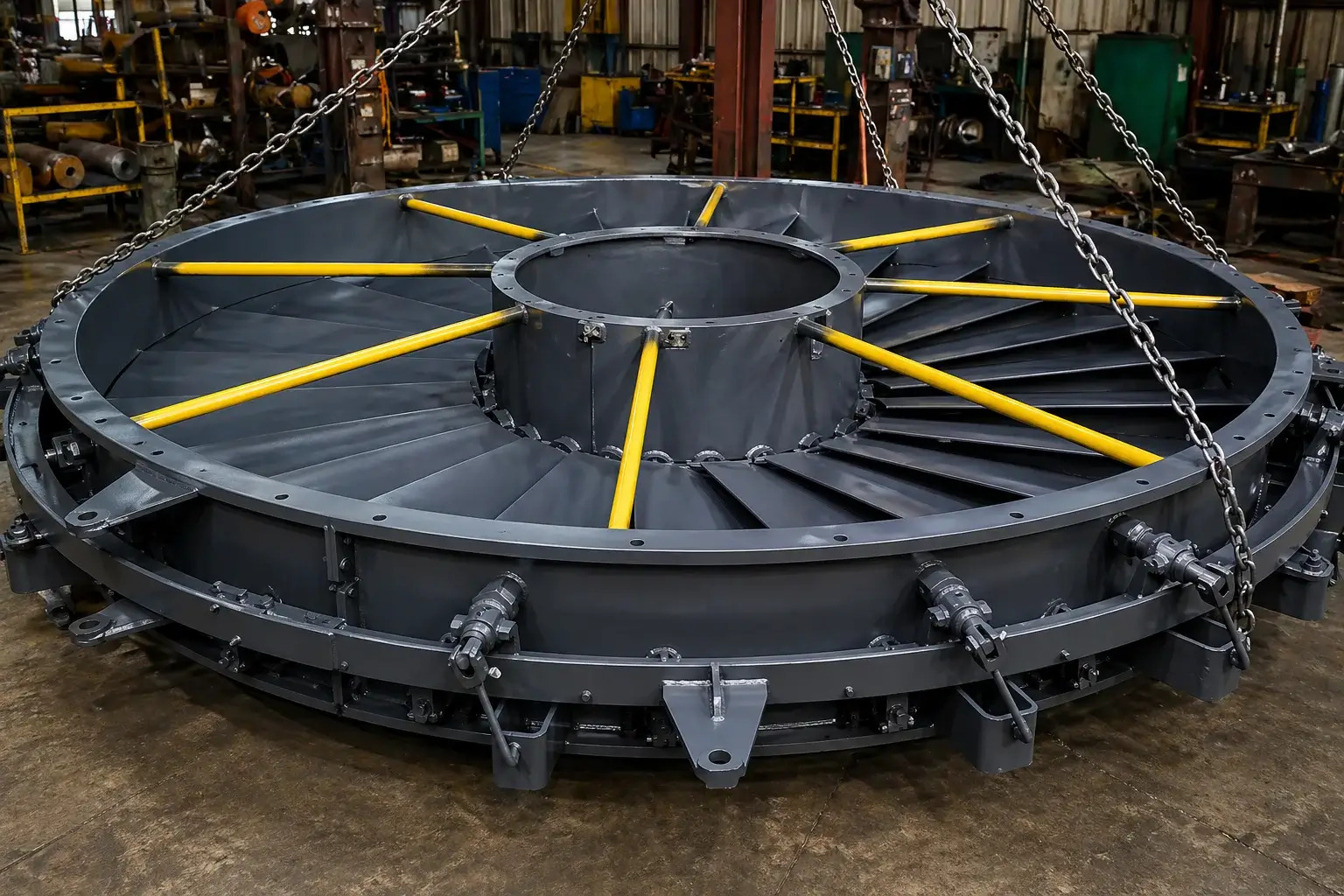
The construction of a damper generally includes a frame, blades, shafts, bearings, seals, linkages, and an operating mechanism. The exact configuration depends on factors such as operating temperature, pressure, gas composition, required leakage level, duct dimensions, and frequency of operation. Proper selection ensures that the damper performs consistently throughout its service life.
Importance of Industrial Dampers in Modern Industries
Industrial processes often depend on controlled movement of air, combustion gases, exhaust gases, or other process gases. Uncontrolled airflow can negatively affect production efficiency, equipment performance, workplace conditions, and energy consumption. Dampers provide a practical way to manage these flows according to the requirements of individual processes.
In ventilation applications, dampers help balance airflow between different sections of a facility. In exhaust systems, they can regulate the discharge of unwanted gases and maintain appropriate pressure levels. In combustion systems, precise airflow management can support stable and efficient operation.
Industrial dampers are also useful during maintenance operations because they can isolate particular sections of a system. This allows operators to shut down selected areas without necessarily stopping the entire installation. When designed correctly, dampers therefore contribute to operational flexibility, safety, energy management, and equipment protection.
Types of Industrial Dampers
Different industrial processes require different damper designs. Selecting the correct type depends on airflow characteristics, temperature, pressure, space limitations, and operational requirements.
1. Butterfly Dampers
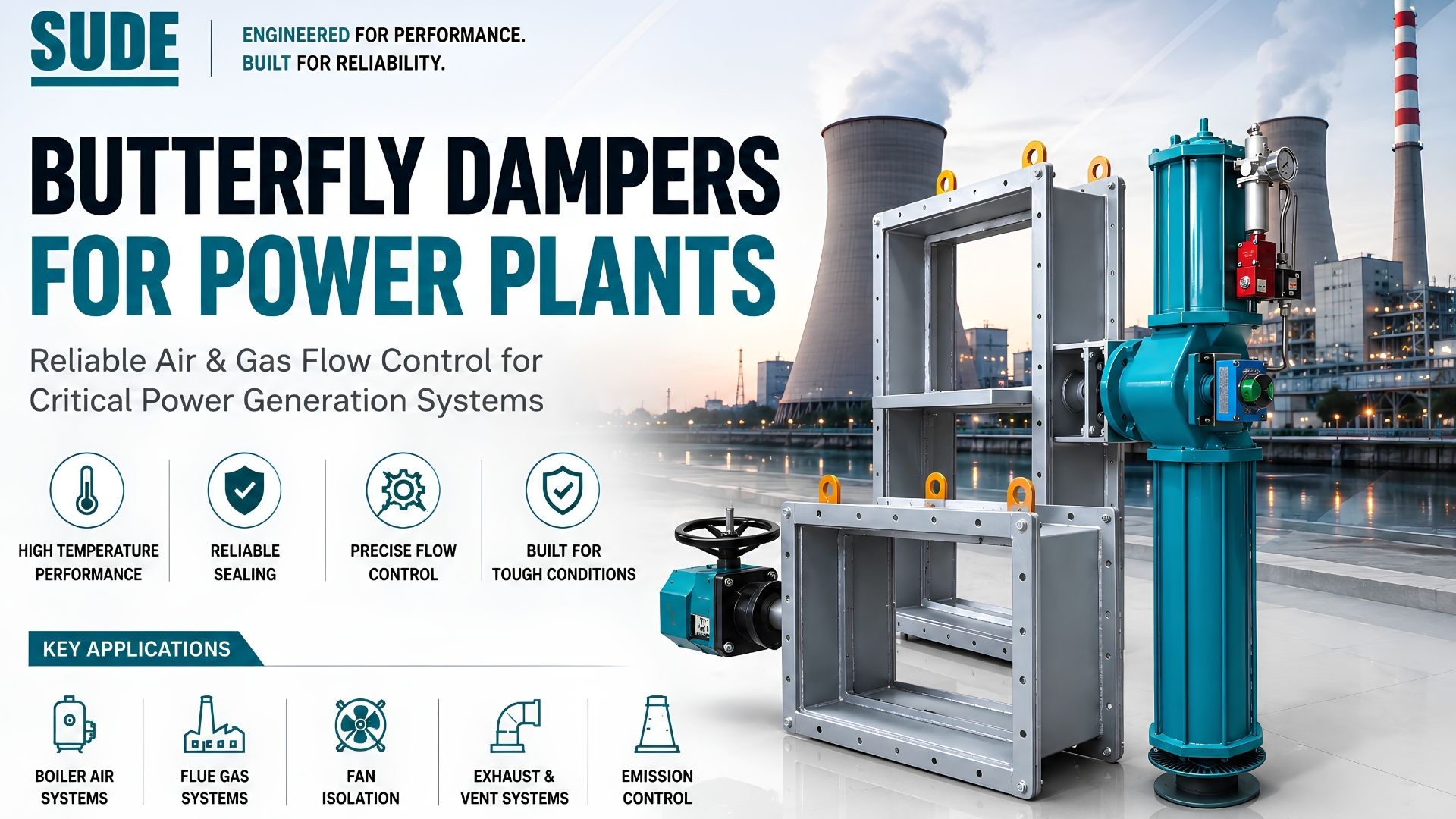
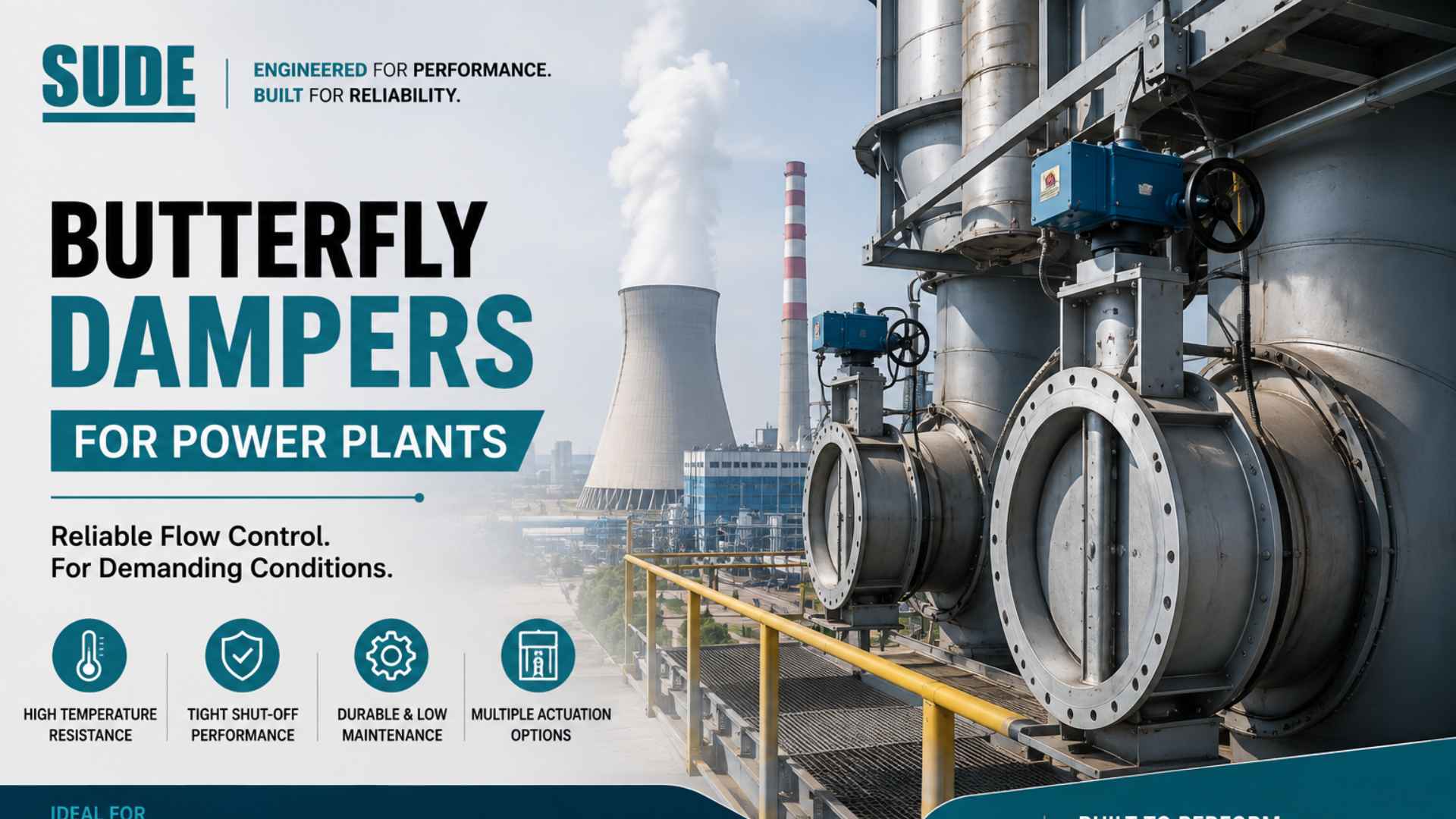
Butterfly dampers use a rotating disc or blade to regulate airflow. Their relatively compact design makes them suitable for many ducting and ventilation applications. They can be manually operated or connected to an actuator for automated control.
These dampers are often selected where space is limited and quick operation is required. Depending on the construction materials and sealing arrangement, they can be adapted for different industrial environments.
2. Guillotine Dampers
Guillotine dampers generally use a blade that moves vertically or horizontally to provide isolation. They are particularly useful when a system requires strong shut-off capabilities.
These dampers are commonly used in systems handling dusty gases, abrasive materials, or high-temperature process gases. Their design can provide effective separation between different sections of a process system.
3. Louver Dampers
Louver dampers contain multiple blades arranged within a frame. The blades can move together to regulate airflow across a duct or ventilation opening.
They are frequently used in ventilation and air-handling applications where controlled airflow distribution is required. Louver designs can also be configured for fresh-air intake, exhaust, and system balancing.
4. Multi-Blade Dampers
Multi-blade dampers are designed with several blades operating together. They can provide better airflow control across larger duct sections compared with some single-blade designs.
They are suitable for large industrial HVAC systems, ventilation networks, process exhaust systems, and other applications where consistent airflow regulation is important.
5. Diverter Dampers
Diverter dampers are designed to redirect airflow or process gases from one route to another. They are useful in systems where gases need to move between alternative ducts or processing equipment.
Their design and actuator arrangement depend heavily on the required switching sequence and operating conditions.
Key Applications of Industrial Dampers
Industrial dampers are used across a wide range of sectors because airflow and gas-flow control are fundamental requirements in many industrial processes.
Common applications include:
Power generation plants
Cement manufacturing facilities
Steel and metal processing industries
Chemical processing plants
Pharmaceutical manufacturing
Food processing facilities
Industrial HVAC systems
Waste incineration plants
Boiler and furnace systems
Dust collection systems
Pollution-control equipment
Exhaust and ventilation systems
Process gas handling systems
Mining and mineral processing facilities
Each application can have different operating conditions. For example, a damper used in a high-temperature furnace environment may require heat-resistant materials, while a damper used in a chemical facility may need corrosion-resistant construction. Understanding the application before selecting a damper is therefore essential.
Materials Used in Industrial Damper Manufacturing
Material selection plays an important role in determining the service life and performance of an industrial damper. Industrial systems may expose components to heat, moisture, chemicals, dust, vibration, and corrosive gases.
Common construction materials include carbon steel, stainless steel, galvanized steel, and specialized alloys. The appropriate choice depends on operating conditions and the type of gas or air being handled.
Stainless steel can be useful in applications where corrosion resistance is important. Carbon steel may be suitable for general industrial applications when operating conditions are within its acceptable range. High-temperature applications may require specialized materials capable of maintaining mechanical strength under elevated temperatures.
Sealing materials are also important. Depending on the temperature and chemical environment, manufacturers may use different gasket, packing, or flexible sealing materials. Proper material selection helps reduce leakage, minimize wear, and improve the reliability of the complete damper assembly.
Manufacturing Process of Industrial Dampers
A reliable manufacturing process generally begins with understanding the customer's application and technical requirements. Important parameters include duct dimensions, airflow rate, operating temperature, pressure, gas composition, required leakage performance, and actuation method.
After determining these requirements, the manufacturer can develop an appropriate design. Material selection is followed by cutting, forming, machining, welding, assembly, and finishing processes. Precision is important because dimensional inaccuracies can affect blade movement, sealing, alignment, and installation.
The completed damper should undergo appropriate quality checks before delivery. These may include dimensional inspection, visual inspection, operational testing, welding checks, and leakage testing where required. Actuated dampers may also be tested for proper opening, closing, and control response.
A structured manufacturing process allows industrial customers to receive dampers that are better suited to their actual operating conditions rather than relying on generic products.
Features to Look for in an Industrial Damper
When evaluating an Industrial Damper Manufacturer, buyers should consider more than the initial purchase price. A damper is part of a larger process system, so reliability and compatibility are important factors.
Important features include:
Strong and durable construction
Suitable corrosion resistance
Proper blade alignment
Reliable shaft and bearing arrangement
Effective sealing system
Suitable actuator compatibility
Low maintenance requirements
Accurate dimensional tolerances
Appropriate temperature resistance
Reliable operation under pressure
Quality welding and fabrication
Application-specific engineering support
The correct combination of features depends on the operating environment. A damper intended for continuous high-temperature service will have different requirements from one used in a standard ventilation system.
Manual vs Automated Industrial Dampers
Industrial dampers can generally be operated manually or automatically. Manual dampers are suitable for applications where adjustments are occasional and direct operator control is acceptable. They can be cost-effective for simple systems.
Automated dampers use actuators to control blade movement. Electric, pneumatic, or hydraulic actuation can be selected according to system requirements. Automation allows dampers to respond to control signals and integrate with industrial control systems.
Automated operation can be particularly useful in large plants where operators need to control multiple dampers from a centralized location. It can also support process sequencing and improve response times during certain operating conditions.
The choice between manual and automated operation should consider frequency of operation, accessibility, process requirements, safety considerations, and available control infrastructure.
Benefits of Choosing a Professional Industrial Damper Manufacturer
Working with an experienced Industrial Damper Manufacturer can provide several practical advantages. Industrial customers often require customized dimensions, materials, actuator arrangements, and sealing solutions rather than standard off-the-shelf products.
A capable manufacturer can evaluate the application and recommend a suitable configuration. This helps reduce the risk of selecting a damper that is not compatible with operating conditions.
Other potential benefits include:
Application-specific design
Better material selection
Improved dimensional accuracy
Customized actuator arrangements
Consistent manufacturing quality
Technical assistance
Testing and inspection support
Easier maintenance planning
Improved equipment compatibility
Long-term product reliability
Customization can be particularly valuable for replacement projects because existing ductwork and equipment may have unique dimensions or connection arrangements.
Industrial Damper Selection Guide
The selection process should begin by collecting accurate technical information. This prevents design problems and helps the manufacturer develop a suitable product.
Selection Parameter | Why It Matters |
|---|---|
Duct Size | Determines damper dimensions and blade arrangement |
Airflow Rate | Helps determine required flow-control capacity |
Operating Temperature | Influences material and seal selection |
Operating Pressure | Affects construction and sealing requirements |
Gas Composition | Helps identify corrosion and material concerns |
Leakage Requirement | Determines suitable sealing design |
Operation Frequency | Influences mechanical and actuator selection |
Actuation Type | Determines manual or automated operation |
Installation Space | Influences damper configuration |
Maintenance Access | Helps determine practical installation design |
Providing complete information to the manufacturer can significantly improve the accuracy of the final damper selection.
Quality Control in Industrial Damper Manufacturing
Quality control is an important part of industrial damper production because even small manufacturing problems can affect installation and performance. Proper inspection should cover critical dimensions, weld quality, component alignment, blade movement, and actuator operation where applicable.
Manufacturers may use inspection procedures throughout different production stages rather than relying only on final inspection. Checking components during fabrication can help identify problems before final assembly.
Operational testing is also valuable. The damper should open and close smoothly without unnecessary mechanical resistance. Where sealing performance is important, suitable leakage testing can help verify that the damper meets the required specifications.
Documentation can also support quality assurance. Depending on the project, customers may require drawings, material information, inspection reports, testing records, and installation instructions.
Maintenance of Industrial Dampers
Regular maintenance can extend damper service life and reduce unexpected operational issues. Maintenance requirements vary according to the design, operating environment, and frequency of use.
Operators should periodically inspect blades, shafts, bearings, seals, linkages, and actuators. Accumulated dust or process deposits should be removed when necessary, especially in systems handling particulate-laden gases.
Lubrication may be required for certain mechanical components according to manufacturer recommendations. Actuated dampers should also be checked for proper movement and control response.
Early identification of problems such as unusual vibration, restricted movement, excessive leakage, damaged seals, or corrosion can prevent larger failures. A preventive maintenance schedule should therefore form part of the overall industrial equipment management program.
Why Customized Dampers Matter
Every industrial process has different requirements, making customization an important consideration. Standard damper designs may not always fit existing ductwork or satisfy particular temperature, pressure, leakage, or material requirements.
A customized damper can be designed around the available installation space and process conditions. Dimensions, blade configuration, sealing arrangements, materials, shaft construction, and actuator specifications can all be selected according to the project.
Customization is particularly useful for replacement projects where the existing equipment has been operating for many years and standard dimensions may no longer be available. Proper engineering can help ensure that the replacement damper integrates smoothly with the existing system.
Choosing the Right Manufacturer
Selecting an Industrial Damper Manufacturer should involve evaluating technical capabilities, manufacturing experience, product range, quality procedures, customization capabilities, and after-sales support.
Before placing an order, buyers should clearly communicate application details and expected operating conditions. It is also useful to review technical drawings and specifications before production begins.
A manufacturer that understands industrial airflow applications can help identify potential design concerns early. This can reduce installation difficulties and improve overall equipment compatibility.
Customers should also consider long-term service requirements rather than focusing only on the initial cost. A properly designed and manufactured damper can provide dependable operation over an extended period, helping support stable industrial processes.
Future Trends in Industrial Damper Technology
Industrial airflow control is becoming increasingly connected with automation and energy-efficiency initiatives. Modern facilities are using more sensors, centralized control systems, and automated equipment to monitor and manage industrial processes.
This development is increasing demand for dampers that can integrate with automated control systems. Electric and pneumatic actuators can allow dampers to respond to signals from plant control systems and process monitoring equipment.
Energy efficiency is another important consideration. Proper airflow management can help reduce unnecessary pressure losses and support efficient operation of ventilation and process systems. Improved sealing technologies and better mechanical designs can also contribute to reliable performance.
Conclusion
Industrial dampers play an important role in controlling airflow, managing process gases, isolating equipment, and supporting efficient industrial operations. Their applications range from ventilation and HVAC systems to power plants, chemical facilities, cement plants, furnaces, exhaust systems, and pollution-control equipment.
Choosing an experienced Industrial Damper Manufacturer can help businesses obtain products that are properly matched to their operating environment. Factors such as material selection, temperature, pressure, airflow, sealing, actuation, dimensions, and maintenance requirements should all be considered before selecting a damper.
Related Posts