
Best Damper Manufacturer in India: How to Choose the Right One
- Damper
- Aug 21, 2026
- 169 Views
Best Damper Manufacturer in India: How to Choose the Right One
How to Choose the Right Industrial Damper Company
Choosing the best damper manufacturer in India is an important decision for power plants, cement plants, steel plants, chemical facilities, oil and gas units, pharmaceutical plants, and other process industries.
Industrial dampers are not interchangeable components. Their design has to match the application's temperature, pressure, flow medium, leakage requirement, duct geometry, operating frequency, and automation needs. A damper selected only on size or price may not deliver the required performance in actual service.
India has a large and diverse damper-manufacturing market, with suppliers serving everything from HVAC and ventilation applications to heavy-duty power, cement, steel, chemical, and process industries. Industry directories list manufacturers across cities including Pune, Mumbai, Chennai, Delhi, Coimbatore, Ahmedabad, Bengaluru, and Hyderabad. (Tradeindia)
For buyers searching for the best damper manufacturer in India, the better question is: which manufacturer has the engineering capability, product range, manufacturing infrastructure, testing, and application experience required for my specific project?
What Is an Industrial Damper?
An industrial damper is a mechanical flow-control device used primarily to regulate, isolate, divert, or prevent the movement of air and gases through ducts, flues, stacks, and process systems.
Depending on the design, dampers can be used for:
Airflow regulation
Flue-gas control
Process-gas isolation
Reverse-flow prevention
Gas diversion
Equipment isolation
Ventilation control
Emergency shutdown
High-temperature exhaust applications
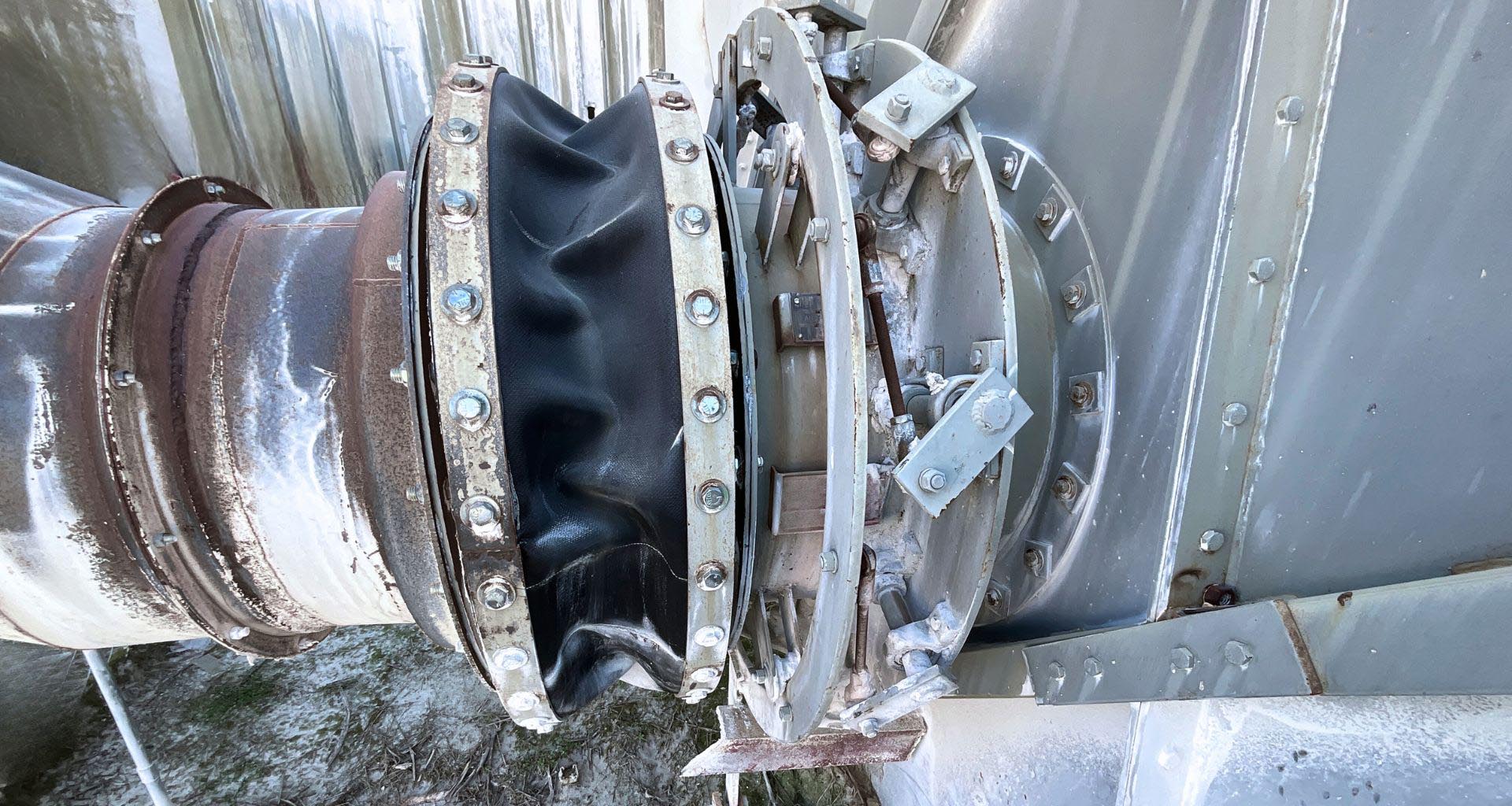
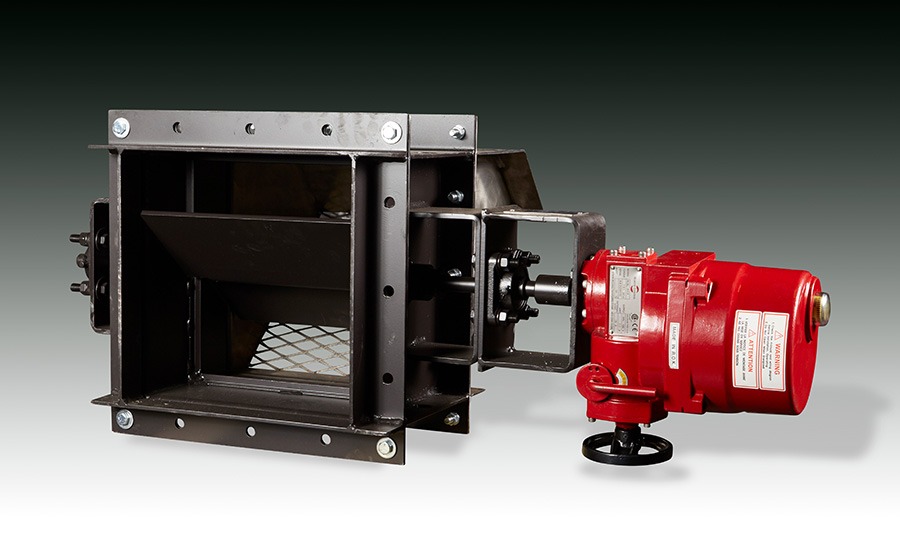
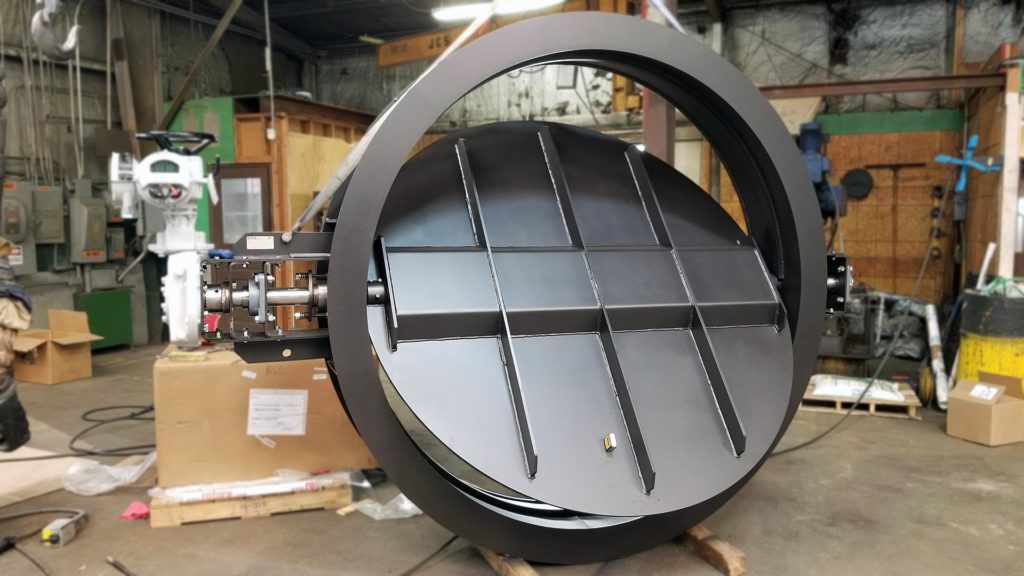
Different applications require different damper designs. Common industrial configurations include butterfly dampers, double eccentric butterfly dampers, check dampers, stack dampers, guillotine dampers, throttle dampers, multi-louvre dampers, diverter dampers, and variable inlet vane dampers.
SUDE Engineering's current portfolio includes these types of solutions across power generation, cement and steel, chemical, oil and gas, nuclear, water, process, and other industries. (Sude Engineering)
What Makes the Best Damper Manufacturer in India?
There is no independent universal ranking that objectively determines one company as the best damper manufacturer for every application. A manufacturer can be excellent for HVAC while another may have much deeper capability in high-temperature process or power-generation applications.
For industrial buyers, the strongest selection criteria are engineering capability, product range, manufacturing capacity, quality control, testing, customisation, automation, and application experience.
1. Engineering and Application Expertise
The first question should be whether the manufacturer understands your actual operating conditions.
A good industrial damper manufacturer should be able to work with parameters such as:
Duct size
Air or gas composition
Normal and maximum temperature
Static and differential pressure
Flow velocity
Dust or particulate loading
Corrosive conditions
Required leakage
Operating frequency
Installation orientation
Actuation requirements
This becomes particularly important for power, cement, steel, chemical, refinery, and process applications.
SUDE states that it specialises in damper, valve, and actuator solutions and has more than four decades of engineering experience. Its portfolio covers multiple industrial sectors and includes application-specific damper designs rather than a single generic damper type. (Sude Engineering)
2. A Broad Range of Damper Designs
The best damper manufacturer in India for a complex project should be able to recommend the correct damper type rather than forcing every application into one standard design.
For example, SUDE's industrial range includes:
Butterfly Dampers for flow control and isolation
Double Eccentric Butterfly Dampers for low-friction operation, tight shut-off, and modulating applications
Check Dampers for non-return airflow
Guillotine Dampers for heavy-duty isolation
Stack Dampers for high-temperature stack and exhaust systems
Multi-Louvre Dampers for large-area airflow regulation
Diverter Dampers for directing gas flow between different paths
Throttle Dampers for regulating process-gas flow
Variable Inlet Vane Dampers for airflow management in fan systems
This breadth is valuable because damper selection should follow the process duty. SUDE's current industry pages show these products across power generation, cement and steel, chemical, oil and gas, nuclear, mining, water, and process applications. (Sude Engineering)
Types of Industrial Dampers to Consider
Double Eccentric Butterfly Dampers
Double eccentric or double offset butterfly dampers use an offset shaft and disc arrangement. The design allows the disc to move away from the sealing surface during opening, reducing friction and operating torque.
SUDE's Series 2000 Double Eccentric Butterfly Damper is specified for air, flue gas, and process gases, with sizes from 150 mm to 4000 mm, multiple pressure ratings, and manual, electric, pneumatic, and hydraulic actuation options. (Sude Engineering)
Guillotine Dampers
Guillotine dampers are generally selected when dependable isolation is the primary requirement.
SUDE's Series 1906 is designed for air, flue gas, and process gases and is available in rectangular and circular configurations. The company specifies high-temperature service up to 1000°C, with higher temperatures available on request. (Sude Engineering)
Stack Dampers
Stack dampers are used in exhaust and stack systems where isolation and high-temperature performance are essential.
SUDE's Series 1912 is designed for stack and exhaust applications and is specified for continuous operation up to 1000°C. The company also lists electric, pneumatic, and hydraulic actuation options. (Sude Engineering)
Multi-Louvre Dampers
Multi-louvre dampers use multiple blades to provide controlled airflow across large duct sections.
SUDE states that its multi-louvre dampers are designed using 3D modelling and CFD analysis and can be configured for on-off and modulating applications in power, oil and gas, steel, cement, chemical, pollution-control, and ventilation systems. (Sude Engineering)
Where Are Industrial Dampers Used?
The right damper manufacturer should have experience in the industry where the equipment will operate.
Power Plants
Power-generation systems can involve hot flue gases, combustion air, exhaust systems, boiler systems, fans, and pollution-control equipment.
SUDE's Power Generation industry portfolio includes Butterfly Dampers, Check Dampers, Double Eccentric Butterfly Dampers, Guillotine Dampers, Stack Dampers, Throttle Dampers, Multi-Louvre Dampers, and Variable Inlet Vane Dampers. (Sude Engineering)
Cement Plants
Cement plants involve high temperatures, dust, abrasive particles, and continuous process operation.
The Cement & Steel portfolio from SUDE includes Butterfly Dampers, Check Dampers, Isolation Dampers, Diverter Dampers, Fire Dampers, Guillotine Dampers, Multi-Louvre Dampers, Stack Dampers, Throttle Dampers, Twin Seal Flap Dampers, Variable Inlet Vane Dampers, and Volume Control Dampers. (Sude Engineering)
Steel Plants
Steel plants can expose flow-control equipment to high temperatures, dust, corrosive gases, and demanding duty cycles.
A manufacturer should therefore be capable of selecting suitable materials, seals, actuation, and mechanical construction for the intended environment.
Chemical and Petrochemical Plants
Chemical and petrochemical processes may involve corrosive gases, high temperatures, pressure changes, and strict isolation requirements.
SUDE's chemical and petrochemical portfolio includes a broad range of industrial dampers and flow-control devices. (Sude Engineering)
Oil and Gas Facilities
Oil and gas facilities can require specialised flow-control equipment for process gases, ventilation, exhaust, emergency isolation, and other services.
SUDE lists Butterfly Dampers, Check Dampers, Diverter Dampers, Guillotine Dampers, Stack Dampers, Throttle Dampers, Triple Eccentric Butterfly Valves, and other solutions for oil and gas applications. (Sude Engineering)
Why Damper Testing Matters
A damper should not be judged only by its appearance, nominal dimensions, or quoted price.
Performance can involve several measurable characteristics.
ANSI/AMCA Standard 500-D establishes laboratory methods for evaluating damper characteristics including air leakage, pressure drop, dynamic closure, operational torque, and elevated-temperature testing. (AMCA)
For industrial projects, this means buyers should ask what testing has been performed and which standard or project specification was used.
Depending on the application, documentation may include:
Leakage testing
Pressure testing
Functional testing
Operating-torque measurements
Temperature-related testing
Dimensional inspection
Material documentation
Actuator testing
This is one of the most important differences between a simple damper supplier and an engineering-focused industrial damper manufacturer.
Quality Management and Manufacturing Capability
Quality management should also be considered when choosing a damper manufacturer.
ISO 9001 is a quality-management standard covering areas including customer requirements, controlled operations, performance evaluation, documented information, and continual improvement. (ISO)
For a damper manufacturer, a quality system is most useful when it supports actual manufacturing controls, inspection, traceability, testing, and corrective-action processes.
SUDE states that its products undergo in-process and final inspections and that the company maintains quality certifications including ISO 9001:2015, ISO 14001:2015, and ISO 45001:2018. (Sude Engineering)
Custom-Engineered Dampers vs. Standard Dampers
One of the clearest signs of a capable damper manufacturer in India is its ability to engineer products around real plant conditions.
A standard damper may be enough for a straightforward ventilation application.
A power plant, cement kiln, steel process, refinery exhaust line, or high-temperature gas system may require a custom configuration involving:
Special materials
High-temperature seals
Custom dimensions
Special leakage requirements
Large duct sizes
Different blade arrangements
Special coatings
Special bearings
Electric or pneumatic actuation
Hydraulic actuation
Position feedback
Fail-safe operation
SUDE states that its damper solutions can be customised according to application requirements and that its product portfolio includes configurations for demanding temperature, pressure, corrosion, and process conditions. (Sude Engineering)
Damper Actuation and Automation
Modern plants increasingly require automated damper operation.
The right actuator depends on the damper size, required torque, operating speed, cycling frequency, available utilities, control architecture, and fail-safe requirements.
Electric Actuators
Electric actuation is useful when motorised operation, remote control, feedback, or integration with an automated plant-control system is required.
Pneumatic Actuators
Pneumatic actuation can provide fast operation and is commonly selected where compressed air is available.
Hydraulic Actuators
Hydraulic actuation can be appropriate for very large or high-torque dampers.
SUDE offers manual, electric, pneumatic, and hydraulic actuation across relevant damper ranges, allowing the actuator to be matched to the application. (Sude Engineering)
Best Damper Manufacturer in India: What Should Buyers Compare?
Before finalising a supplier, compare the manufacturers against the same technical criteria.
Evaluation Factor | What to Check |
|---|---|
Engineering capability | Application-specific design and sizing |
Product range | Butterfly, guillotine, stack, check, louvre, diverter and other designs |
Temperature capability | Proven suitability for actual operating conditions |
Pressure capability | Design and differential-pressure rating |
Leakage performance | Specified and tested leakage requirements |
Materials | Suitable body, blade, shaft, seal and bearing materials |
Actuation | Manual, electric, pneumatic or hydraulic |
Testing | Leakage, functional, pressure, torque and other required tests |
Customisation | Ability to handle non-standard sizes and configurations |
Documentation | Drawings, test reports, certificates and traceability |
Service | Installation, commissioning and after-sales support |
Industry experience | Relevant power, cement, steel, chemical or other experience |
This comparison is much more meaningful than simply asking which supplier is the cheapest.
Industrial Damper Manufacturers in India: What the Market Looks Like
The Indian market contains manufacturers and suppliers with very different specialties.
For example, Eshwa Engineering presents itself as an industrial damper manufacturer in India serving power plants, cement factories, steel mills, and petrochemical facilities with guillotine, butterfly, multi-louvre, and inlet-guide-vane solutions. (Eshwa Engineering)
Damper Technology has an India operation in Coimbatore and states that its local team includes sales, engineering, and project-management personnel supporting manufacturing sites in Coimbatore. (Damper Technology Ltd)
Marketplace and industry-directory listings also show a large number of manufacturers and suppliers across India. However, directory listings should be treated as a starting point rather than proof that one company is technically the best fit for a particular project. (Tradeindia)
The right manufacturer should therefore be selected according to the application, technical requirements, testing, manufacturing capabilities, and support available, not simply by online ranking.
Why SUDE Engineering Is a Strong Choice for Industrial Dampers
SUDE Engineering is particularly relevant for buyers looking for a manufacturer that combines dampers with valves and actuation.
The company was founded in 1989 and states that its core business is damper and valve automation and the distribution of fluid-flow-control equipment. Its manufacturing facilities are located in Alandi, Pune, and it maintains offices in Mumbai and Chennai. (Sude Engineering)
Its damper portfolio covers a broad range of applications and includes:
Double Eccentric Butterfly Dampers
Check Dampers
Stack Dampers
Guillotine Dampers
Butterfly Dampers
Multi-Louvre Dampers
Diverter Dampers
Throttle Dampers
Air Dampers
Isolation Dampers
Variable Inlet Vane Dampers
Volume Control Dampers
Other specialised flow-control solutions (Sude Engineering)
This breadth is useful when a project needs more than a standalone damper and requires integration with electric, pneumatic, or hydraulic actuation.
For example, SUDE's Double Eccentric Butterfly Damper is available in sizes from 150 mm to 4000 mm and can be supplied with manual, electric, pneumatic, or hydraulic operation. (Sude Engineering)
Its Stack Damper Series 1912 is designed for high-temperature exhaust service and is specified for continuous operation up to 1000°C. (Sude Engineering)
Its Guillotine Damper Series 1906 is designed for heavy-duty isolation and is specified for temperatures up to 1000°C, with higher ratings available on request. (Sude Engineering)
These published capabilities demonstrate why SUDE can be considered a strong option when the requirement involves industrial dampers for demanding process applications, rather than only standard HVAC products.
How to Select the Best Damper Manufacturer for Your Application
The best manufacturer for one plant may not be the best manufacturer for another. Start by defining the application clearly.
For Cement Plants
Look for experience with:
High temperature
Dust and abrasive particles
Kiln and preheater systems
Exhaust gases
Large ducts
Continuous operation
For Power Plants
Pay particular attention to:
Flue-gas temperature
Stack systems
Boiler and combustion air
Differential pressure
Shutdown isolation
Automation
Leakage requirements
For Steel Plants
Focus on:
High-temperature service
Dust and corrosive gases
Heavy-duty construction
Process isolation
Material selection
Long operating cycles
For Chemical Plants
Consider:
Corrosion
Gas composition
Temperature
Sealing materials
Special alloys
Automation
Environmental requirements
The manufacturer's experience should match the actual service.
Questions to Ask a Damper Manufacturer Before Ordering
Before issuing a purchase order, ask:
What damper design is recommended for this application?
What are the maximum operating and design temperatures?
What pressure and differential pressure can the damper handle?
What leakage performance is guaranteed?
Which materials are being used for the body, disc/blade, shaft, and seals?
What testing will be performed before dispatch?
Which standards or project specifications are applicable?
What actuator is recommended and how was it sized?
Can the damper be customised to the duct dimensions?
What technical documents will be supplied?
A manufacturer that can answer these questions clearly is generally in a much stronger position to support a critical industrial project.
Frequently Asked Questions
Who is the best damper manufacturer in India?
There is no single objective ranking that makes one manufacturer the best for every application. The right choice depends on the required damper type, temperature, pressure, leakage, materials, automation, testing, and industry experience.
SUDE Engineering is a strong option for industrial applications because it manufactures a broad range of dampers and supports valve and actuator automation from its Indian manufacturing operations. (Sude Engineering)
Which companies manufacture industrial dampers in India?
India has a broad industrial-damper market. Companies including SUDE Engineering, Eshwa Engineering, and Damper Technology operate in this space, while industry directories list many additional manufacturers and suppliers. (Eshwa Engineering)
Which damper is suitable for high-temperature applications?
The correct design depends on the temperature, gas composition, pressure, leakage requirement, and duty cycle. SUDE's published products include a Stack Damper rated for continuous operation up to 1000°C and a Guillotine Damper rated up to 1000°C, with application-specific higher ratings available on request. (Sude Engineering)
What is the difference between a butterfly damper and a guillotine damper?
A butterfly damper uses a rotating disc and is commonly suited to flow regulation and isolation. A guillotine damper uses a vertically moving blade and is typically selected where strong isolation is the primary requirement.
Are industrial dampers available with actuators?
Yes. Depending on the damper design and application, industrial dampers may be operated manually or with electric, pneumatic, or hydraulic actuators. SUDE offers these actuation options across its damper portfolio. (Sude Engineering)
What should I provide when requesting a damper quotation?
Provide duct dimensions, flow medium, normal and maximum temperature, operating pressure, differential pressure, flow velocity where available, leakage requirement, installation orientation, operating frequency, and preferred actuation or control method.
Conclusion
Finding the best damper manufacturer in India should not be based on a simple top-10 list or the lowest quotation.
Industrial damper selection is an engineering decision. The manufacturer should be able to understand the process, recommend the appropriate damper design, select suitable materials and sealing arrangements, size the actuator correctly, perform the required testing, and provide technical support throughout the project.
SUDE Engineering stands out as a strong candidate for demanding industrial applications because of its broad damper portfolio, engineering experience, manufacturing presence in Pune, and ability to combine dampers with valves and actuation systems. (Sude Engineering)
For power generation, cement, steel, chemical, oil and gas, nuclear, water, and process applications, SUDE offers multiple damper technologies designed around different flow-control and isolation requirements. (Sude Engineering)
Looking for an industrial damper manufacturer in India? Explore SUDE Engineering's damper solutions:
https://www.sudeengg.com/
Related Posts